
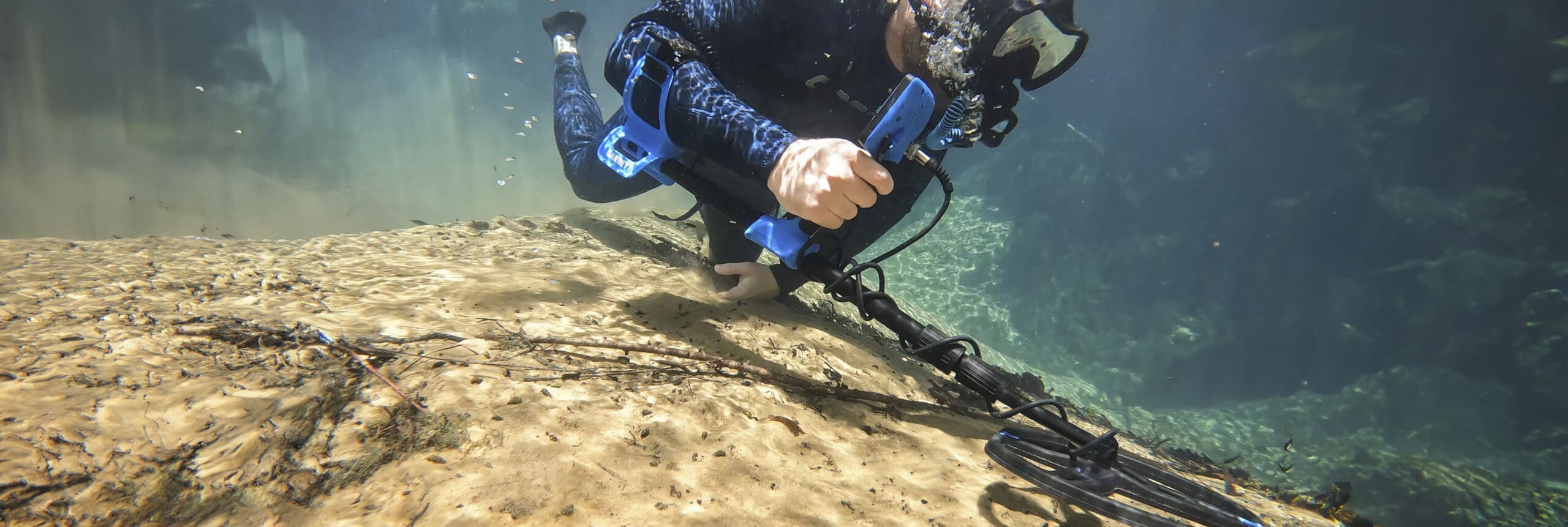
River prospecting is one of the most accessible and rewarding ways to search for gold. Rivers and creeks do much of the sorting work for you, concentrating placer gold and alluvial deposits in predictable locations over thousands of years. Whether you are a first-time prospector or someone looking to sharpen your skills, this guide covers the equipment you need, the best places to look, and how to search effectively.
You do not need to be an expert to get started with river gold prospecting. Most of the skills are learned in the field, and the learning curve is shorter than most people expect. With help from our team at Garrett and by understanding a few core principles about how gold moves and settles, you can start finding color on your very first outing, no matter what part of gold country you are searching in.
Key Takeaways
- Gold settles where river current slows, which is why inside bends, bedrock cracks, and calm pockets are prime places to search.
- Understanding how placer and alluvial gold move through a river helps you focus on the most productive areas faster.
- A detector matched to your conditions, whether VLF or PI, can make a major difference in what you find.
- Waterproof coils, a gold pan, and basic digging tools are essential for effective river prospecting.
- Black sand, iron-stained rock, and small gold flakes are strong clues that more gold may be nearby or upstream.
- Garrett offers river-ready gold detectors that help beginners and experienced prospectors search wet, mineralized ground more effectively.
Understanding How Gold Moves in Rivers
Gold is significantly heavier than the sand, gravel, and rock that surround it. This single fact drives everything about where gold ends up in a riverbed. As water flows downstream, it sorts material by weight. Lighter sediment travels far, while heavier material drops out of the current quickly. Gold, being one of the densest minerals you will find in any stream or river, sinks fast and stays put.
Because of this weight difference, gold does not spread evenly across a riverbed. It collects in specific low-pressure zones where the current slows down enough to let heavy material settle and accumulate. Unlike lode deposits, which are found locked in hard rock where gold was originally formed, placer gold and alluvial deposits are the result of erosion breaking down those source rocks over time.
Residual deposits form close to the original lode, while bench deposits typically sit on old riverbanks elevated well above the current waterline, created by ancient flood layers that carried gold far from its source.
Essential Equipment for Finding Gold in a River
Choosing the Right Metal Detector
VLF (Very Low Frequency) detectors are a strong choice for beginners and intermediate prospectors. They are best at detecting small nuggets, flakes, and fine gold near the surface, and high-frequency VLF models offer superior sensitivity to tiny targets.
PI (Pulse Induction) detectors are built for tougher conditions. They are ideal for highly mineralized ground and deeper targets, making them the better tool for challenging river environments where iron-rich soil and black sand create interference. If you plan to work deep in areas with heavy ground mineralization or want to reach targets that a VLF might miss, stepping up to a PI detector is worth the investment.
Waterproofing Your Setup
Waterproofing is non-negotiable for any serious river work. At a bare minimum, your coil must be fully waterproof so you can sweep it through shallow water and wet gravel without risking damage. A non-waterproof setup will limit where you can search along the shore and riverbank, and put your equipment at risk every time the water level rises unexpectedly.
The recommended upgrade is a fully waterproof detector, like our Vortex series models, which allows you to wade deeper and perform submerged scanning along the river bottom in streams and shallow crossings.
Supporting Tools to Bring
A well-prepared prospector carries more than just a detector. These four tools round out a complete river kit:
- Rock pick — for breaking apart crevices and loosening compacted gravel
- Shovel — for moving overburden and digging target zones
- Crevice tool — for extracting material from narrow bedrock cracks
- Gold pan — for sampling and verifying signals before committing to a full dig
A sluice box is also worth adding to your kit when you want to process a larger volume of material quickly. It allows you to run gravel from a productive zone through flowing water and collect the heaviest concentrates, including fine gold and black sand, at the lower end.
Where to Search: Top Gold-Bearing Locations in a River
Inside Bends
Water slows dramatically on the inside of a river curve. When the current loses speed, it loses the ability to carry heavy material, and gold drops out of suspension right there. This makes inside bends some of the most consistently productive and rich deposits on any river or creek, and they tend to be the first spots experienced prospectors watch when scouting a new area.
Walk the inner bank and focus your detector sweeps on the gravel bars that form in these areas. The gold does not always sit on the surface, it may be buried under several inches of lighter sediment, so slow, methodical sweeping pays off here more than anywhere else.
Behind Boulders and Large Obstructions
Large boulders and rocks interrupt current flow and create calm eddies on the downstream side. Gold is carried along by fast water stalls and settles in these quiet pockets, sometimes building up over many flood cycles into surprisingly rich concentrations.
Waterfalls and drops in the streambed have a similar effect, creating deep pools just downstream where heavy material collects. Check both directly behind major boulders and slightly to the sides where the eddy effect extends. The calm zone is larger than it looks from the surface, so do not limit your search to just the shadow of the rock.
Bedrock Crevices
Cracks in bedrock that run perpendicular to water flow act as natural gold traps. Gold sinks through loose gravel above and lodges in these fissures, and nuggets have been known to accumulate in a single crack over centuries. Hard layers of exposed bedrock on the river bottom are among the best places to find gold in any prospecting area, and their history of production in old mining regions speaks for itself.
Prioritize crevices that have clearly accumulated sediment, as this is a sign that material has been collecting there rather than flushing through. Your crevice tool will be essential here for extracting packed material that your detector signals are coming from. Any eroded bedrock surface with visible cracks running across the course of the river is worth careful attention.
Root Systems and Moss-Covered Banks
Fine gold particles cling to organic material like roots, moss, and river grass along the banks. The fibrous texture of roots and moss catches small flakes and holds them in the soil, even after floods move most other sediment downstream. Historically productive areas and old mining regions make this even more worthwhile, since decades of flood layers have had time to concentrate fine gold against eroded riverbanks.
Scan low to the bank and pay close attention to exposed root tangles, especially after floods have stripped away surface material. Fresh flood exposure can reveal gold that has been accumulating against the riverbank for years, sometimes in larger amounts than you would expect from such an overlooked location.
How to Search: Techniques and Best Practices
Scanning Technique
Move your coil slowly, gold signals can be subtle and easy to sweep past if you are moving at a normal walking pace. Keep the coil as close to the gravel and sand surface as possible without dragging it, which maximizes depth and sensitivity on small targets near the river bottom. If you do prefer to scrub the soil to get more depth, be sure to keep a protective cover on your coil to keep from scratching its bottom surface.
Use overlapping passes to avoid leaving gaps in your coverage, especially in shallow water and pools where nuggets can hide between sweeps. Think of each pass as painting a surface: you want complete, even coverage rather than speed. This is especially important in deep gravel areas where gold may be located well below the top layer of material.
Reading the Ground: Natural Indicators
Two visual cues can help you prioritize areas before you even turn on your detector. Black sand, which is magnetite, is a reliable sign that heavy minerals have concentrated in that spot. Where black sand accumulates along the riverbed or collects in crevices, gold tends to follow because both materials respond to the same hydraulic forces that shape every river and creek.
Red and iron-stained rock is the second indicator to watch for. Oxidized, reddish, or heavily darkened rocks signal nearby mineral sources and are worth investigating more closely. These natural clues let you spend your time in the highest-probability areas from the start, and in well-known gold country, these signs have guided prospectors to rich deposits for well over a hundred years ago and still hold up today.
Digging and Verifying Signals
Not every signal is gold. Iron debris produces strong false readings that can waste significant time if you commit to a full dig without checking first. Always dig the full signal area and use your gold pan on-site to sort the concentrates and identify what triggered the detector before you spend an hour excavating along the riverbank.
Panning your material at the signal site is one of the most important habits you can build as a prospector. It confirms finds quickly, helps you collect fine flakes that a detector alone might not isolate, and teaches you what your detector sounds like when it is hitting real gold versus junk targets buried in the gravel and sand.
Following Gold Upstream
Finding small flakes or fine gold is not the end of the story, it is a directional clue that points you toward larger deposits upstream. Gold becomes coarser and more concentrated as you move toward its original lode source. Small finds downstream mean larger material typically exists somewhere upstream, often not far away, where erosion has been exposing the original deposit over time.
Use each small find to navigate upstream systematically, sampling at regular intervals in pools, behind boulders, and along bedrock until nugget-sized material begins to appear. This method of working toward the source, following the path gold took as water flows eroded and carried it downstream, is one of the most reliable strategies a prospector can use to turn a modest strike into a significant one.
Garrett Gold Prospecting Detectors for River Use
Finding gold in a river starts with having the right detector for the job. Garrett offers purpose-built gold prospecting detectors at every level, from entry-level to professional PI units, each designed to handle the wet, mineralized conditions you will face in the field.
Goldmaster 24k (Waterproof Coil, Entry-Level Pricing)
The Goldmaster 24k runs at 48 kHz, one of the highest frequencies available at an entry-level price, giving it the sensitivity needed to detect the small nuggets and fine flakes most common in river gravel.
- 48 kHz high frequency delivers superior sensitivity to small gold nuggets and fine flakes in riverbed gravel and sand
- XGB auto-tracking ground balance continuously adjusts to the heavily mineralized soil found in gold-bearing rivers
- 6″ x 10″ DD waterproof search coil lets you sweep directly through shallow water and wet riverbed material
- Two audio modes — 2-Tone Beep and VCO Zip — help distinguish subtle gold signals from iron trash and hot rocks
- Adjustable Iron Cancel and hot rock rejection reduce false signals from the iron-stained rocks common in placer environments
- Lightweight at 3.4 lbs with 10 sensitivity levels, Pinpoint mode, backlit display, and Variable Self-Adjusting Threshold
The Goldmaster 24k is built for both beginners and experienced users, making it an ideal starting point for river gold prospecting. Its professional-grade frequency in an accessible package means you can start hunting productive gravel bars and bedrock crevices right away.
Vortex VX9 (Fully Waterproof, Entry-Level Pricing)
The Vortex VX9 is fully submersible to 16 feet, removing every limitation on where you can follow gold in a river, from shallow creek beds to deep pools behind boulders. Its multi-frequency technology and seven search modes make it the most versatile mid-range detector Garrett offers for wet prospecting environments.
- MD-MF multi-frequency technology is ideal for overcoming ground mineralization. In areas with less mineralized soil, the single 25 kHz frequency is a great choice for sniffing out gold nuggets.
- Fully waterproof to 16 feet for complete submersion along the river bottom, in deep pools, and over submerged bedrock crevices
- 3-tiered Target ID with 8 levels of Iron Volume control separates gold signals from iron debris common in alluvial deposits
- Built-in Z-Lynk wireless technology and 15-hour rechargeable battery keep you hunting longer without cable interference
- Lightweight 3 lb frame with an 8.5″ x 11″ DD Raider coil delivers stable, deep performance in mineralized gold country soil
The Garrett VX9 is the natural step up for prospectors ready to move beyond an entry-level detector and into more demanding river conditions. Its full waterproofing and multi-frequency performance make it well suited to everything from shallow creeks to deeper river crossings in productive gold country.
Garrett Axiom (Waterproof Coil & Housing, Powerful PI Detector)
The Axiom is a professional pulse induction detector built for the most mineralized riverbeds where VLF detectors fall short, giving serious prospectors the ability to find deep nuggets in the challenging ground that surrounds the richest alluvial deposits.
- Ultra Pulse PI technology with 4 timing settings — Fine, Normal, Large, and Salt — tunes precisely to different river environments and target depths
- Automatic multi-channel Terra-Scan ground balancing adapts continuously to the extreme mineral variations in gold-bearing riverbeds and creek beds
- Waterproof search coil with IP54 weatherproof housing lets you work through rain, wade shallow water, and sweep wet riverbanks without hesitation
- Iron Check feature helps identify and reject iron trash along the riverbed when using DD coils in old mining areas
- 16-hour rechargeable battery with an included AA booster pack keeps you running through long days in remote gold country
- Collapses to 25 inches for backcountry access and includes MS-3 wireless headphones and a soft carry case for complete field readiness
The Garrett Axiom is available in a standard package with both 13″ and 11″ coils, or as a Lite version for different terrain and depth needs. For prospectors targeting the world’s most demanding river environments, it represents the highest level of PI performance Garrett offers.
Recap: How To Find Gold In a River With a Detector
Every decision you make at the river should come back to one core principle: gold settles where the current slows. Inside bends, behind large boulders, in bedrock crevices, along eroded root-covered banks, in deep pools below waterfalls, all of these locations share the same underlying logic. Once that principle is instinctive, reading a new river or creek and identifying where gold deposits are most likely to collect becomes much faster.The prospectors who find the most gold are not the ones covering the most ground, they are the ones covering their ground the most thoroughly, with the right tools and a clear understanding of how placer gold moves through the world’s rivers and streams. And if you need an industry-leading gold prospecting detector – for beginners or more experienced hobbyists, check out our selection at Garrett.