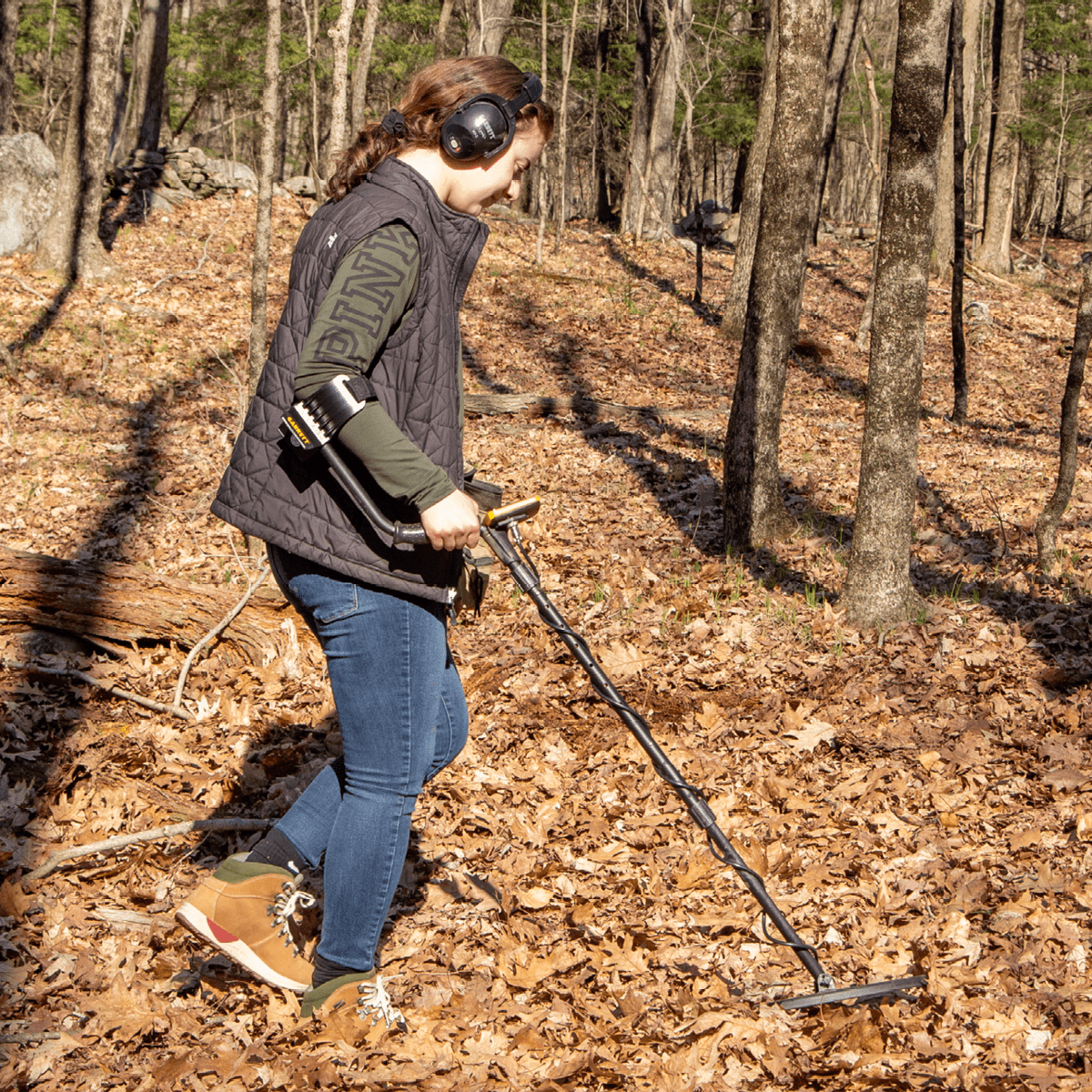
Metal detecting is one of those hobbies that hooks you quickly. It’s beginner friendly, affordable, exciting, and gives you a reason to get outside and explore. Whether you’re scanning your backyard or treasure hunting along the beach, every beep from your metal detector could lead to a valuable target, or at least a fun surprise. That thrill of the hunt? It never gets old.
Still, a lot of people hold back because they think they need the best metal detector on the market or they assume it’s too technical. The truth is, learning how to pick a good metal detector for beginners can be simple if you focus on the right features and stay within a realistic budget. This guide from the team at Garrett will help you choose the right detector, avoid common mistakes, and get started with confidence.
Key Takeaways
- Beginner metal detectors should prioritize simplicity, solid performance, and ease of use over complex features.
- A realistic budget between $200–$450 offers the best balance of value, quality, and user-friendly features.
- Look for essential features like preset modes, adjustable sensitivity, and clear target ID displays.
- Lightweight design and ergonomic grips are critical for longer hunts without fatigue.
- Combining audio tones with visual ID cues helps new detectorists avoid junk and find better targets.
- Garrett offers top starter models like the ACE 200, 300, 400, and Vortex VX5 , designed to grow with your skills.
Understanding Your Needs as a Beginner
When you’re just starting out, it’s tempting to go for detectors with many advanced features. But that can backfire. Most beginner metal detectors with multiple frequencies, advanced settings, or simultaneous multi frequency options are built with more experienced detectorists in mind. You don’t need all that yet.
Instead, focus on a smart choice: something with default settings, simple controls, and solid performance. A beginner metal detector should help you build basic skills like understanding audio tones, reading target ID, and identifying different metals. Learn these first, and you’ll find more good targets, and enjoy the process a lot more.
Setting a Realistic Budget
So how much should you spend? The $200 to $300 price range is ideal for most beginner metal detecting needs. In this range, you’ll find models that offer adjustable sensitivity, preset modes, waterproof coil options, and reliable performance, all without the clutter of unnecessary extras. Increase your budget to around $450, and you can step into a fully-submersible, all-terrain detector like Garrett’s Vortex VX5–which can be later upgraded to more advanced features.
Go under $150, and you might run into detectors with poor detection depth, false signals, or cheap construction. These models can’t handle ground minerals well and often produce false readings near power lines or highly mineralized soil. Spend too much, and you’ll get a device packed with features you don’t know how to use yet.
This middle-ground budget gives you the best chance to find a perfect match, something you can grow into and keep using for years. A good beginner detector will give you good battery life, and target ID accuracy, all while staying affordable.
Essential Features Every Beginner Metal Detector Should Have
Simple Control Panels
You’ll want a detector with simple controls and easy-to-use interfaces. Fewer buttons means less confusion and faster learning. This is where many detectors differ: some try to impress with dozens of menu options, while others keep it clean.
Choose a beginner metal detector with a control layout that lets you adjust basic settings without needing a manual every time. That way, you can fine tune performance without the guesswork.
Preset Detection Modes
Preset modes are a beginner’s best friend. Whether you’re relic hunting in the woods, treasure hunting in the park, or scanning wet sand at the beach, having the right search modes can make all the difference. Look for simple preset modes, such as Coins, Relics, or Jewelry. These help you hunt for specific target types like coins, jewelry, or relics without needing to constantly adjust settings.
Using preset modes also helps you avoid digging up every bottle cap or piece of junk metal. You’ll begin to recognize what good targets sound like and when to pass.
Intuitive Display Systems
As a beginner, you only need to focus on the basics. Look for detectors with a simple screen layout that clearly displays target ID numbers, detection depth, and battery life. Some of the best starter models show a visual target type range to help you decide whether to dig or move on.
Whether the display is digital or analog, it should be easy to read in bright light and during longer hunts. Keep in mind, some detectors also offer Target ID numbers that help you recognize metallic objects, like coins, rings, or iron, based on their conductivity. This makes identifying valuable targets easier and faster.
Weight Considerations
A lightweight design is key. Most beginner metal detectors weigh between 2.5 and 3.5 pounds. A model that’s too heavy will tire you out before you’ve even covered a small park. Also, weight distribution matters. A well-balanced detector reduces arm strain and helps you cover more ground comfortably.
You’ll also want something compact enough for easy transport. Some models come with a carry bag or offer collapsible shafts for travel.
Build Quality for Various Terrains
A detector’s performance in different environments comes down to build quality. Look for models that are durable enough to handle occasional knocks, dirt, and moisture. Weather resistance and waterproof capabilities matter, especially if you’re detecting in light rain or other challenging environments.
Many beginner models now come with a waterproof coil and optional rain cover to protect the control box. If you plan to explore riverbanks or beaches, consider a fully waterproof detector that can be submerged.
Ergonomic Design Elements
Comfort is often overlooked, but it can make or break your detecting sessions. Look for features like an adjustable shaft length, comfortable grip, and balanced weight. These ergonomic elements allow you to swing the detector longer without strain.
Whether you’re using larger coils for deeper targets or smaller coils for tighter spaces, a well-balanced detector makes your hunt easier. Bonus points if your model includes a finds pouch or digging tools with purchase, as some do.
Audio and Visual Feedback Systems
Audio Cues That Matter
Most beginner metal detectors use tone-based audio signals to help you identify different metals. Understanding audio tones is crucial. A high tone might signal silver, while a low tone could mean iron or trash.
Clear audio helps you recognize false signals and false readings, especially when you’re hunting near power lines or in highly mineralized soil. Choose a model that includes a headphone jack and volume control so you can hear signals clearly, even in noisy areas.
Target ID Numbers
Target ID is another tool that helps you identify what’s in the ground before digging. Most detectors assign numbers to different types of metallic objects. For example, coins often show higher numbers, while a bottle cap or nail will have a lower ID or an ID that is not as consistent.
As you gain experience, you’ll learn how to use these numbers along with audio tones to avoid junk and focus on valuable targets.
Combining Audio and Visual Information
The real skill comes from using both audio tones and Target ID displays together. Hearing a sharp tone and seeing a high target ID number? That’s your cue to dig. Seeing a jumpy number with a weak signal? This one might not be worth your time.
Over time, this combination builds your confidence and helps you fine tune your detecting strategy. When your detector gives you both a strong sound and a consistent reading, you’ll start to spot patterns that lead to better finds.
Common Beginner Mistakes
When new treasure hunters enter the field, they often make costly mistakes that can dull the excitement of relic hunting or coin shooting before they even find their first good target.
- Spending too much on a first detector: While high-end models may offer waterproof capabilities, and a large number of menu options, they’re rarely the perfect match for new users. The best metal detector for a beginner is one that balances value and function, not one packed with features you’ll never use. Start with a unit in the $250-$450 range that provides solid detection depth, a waterproof coil, and pinpoint mode, without draining your wallet.
- Choosing models with steep learning curves: Many detectors are packed with many detectors-worth of features. But if it takes you hours just to figure out the menu, you’re not having fun. Look for machines with default settings, preset modes, and helpful target ID systems that help you learn without stress. A confusing interface might lead to missed valuable targets or misidentifying a metallic object.
- Overlooking warranty and support options: Even the best metal detector can fail near power lines or in wet sand. That’s why a solid warranty and dependable support are a must. Check if the detector is fully waterproof or if it comes with optional upgrades like a rain cover. You’ll be glad you did when you’re out in the field with your digging tools and something goes wrong.
Top Garrett Metal Detectors for Beginners
When you’re learning how to pick a good metal detector for beginners, Garrett is one of the most trusted names in the hobby. Our beginner-friendly lineup offers solid performance, simple controls, and models that grow with your skills. Here are our top metal detectors ideal for those just getting started.
Garrett ACE 200: A Smart First Step into Metal Detecting
The ACE 200 is perfect for absolute beginners who want an easy way to learn the ropes. Its lightweight design, preset modes, and easy-to-read Target ID make it ideal for park and field detecting.
- Simple to use right out of the box
- Budget-friendly with reliable performance
- Great for coins and casual treasure hunting
Garrett ACE 300: Beginner Friendly with More Power
Stepping up slightly, the ACE 300 offers more capability without overwhelming complexity. With a higher operating frequency and improved target ID, it’s great for those who want to find valuable targets like jewelry and small relics.
- Larger search coil for deeper detection
- Comes with headphones and accessories
- Perfect balance of default settings and useful advanced features
Garrett ACE 400: A Beginner Detector with Room to Grow
The ACE 400 is a beginner metal detector that offers pro-level touches like Iron Audio and electronic pinpoint mode. It’s excellent for users who want a machine that won’t need replacing as their skills improve.
- Detects deeper targets and filters trash more effectively
- Offers preset modes for different environments
- Great for coin hunting, relic hunting, and mixed-use
Garrett Vortex VX5 : Waterproof and Upgradeable
For new detectorists who want a detector they can grow into. The Vortex VX5 is fully submersible to 16 feet, and includes a powerful multi-frequency operation option. As your skills increase, you can pay a small fee to upgrade your VX5 to a VX7 or VX9, each updated unit providing deeper detection depth, more modes, and more features to help you find more treasure.
- Fully submersible and rugged for tough environments
- Ideal for parks, rivers, lakes, and open-field searching
- Rechargeable built-in battery and fast recovery speed on adjacent targets
Recap: How to Pick the Best Beginner Friendly Metal Detector
Picking the right metal detector isn’t about having the most features, it’s about knowing what features help you grow. Our lineup makes it easy to get started with reliable performance, beginner friendly features, and models that grow with you.Whether you’re just dipping your toes in with the ACE 200, looking for more advanced features with the ACE 400, or ready to explore underwater with the upgradeable Vortex VX5, there’s a Garrett detector that fits your treasure hunting needs, and if you have any questions, just reach out to us – we are happy to help!