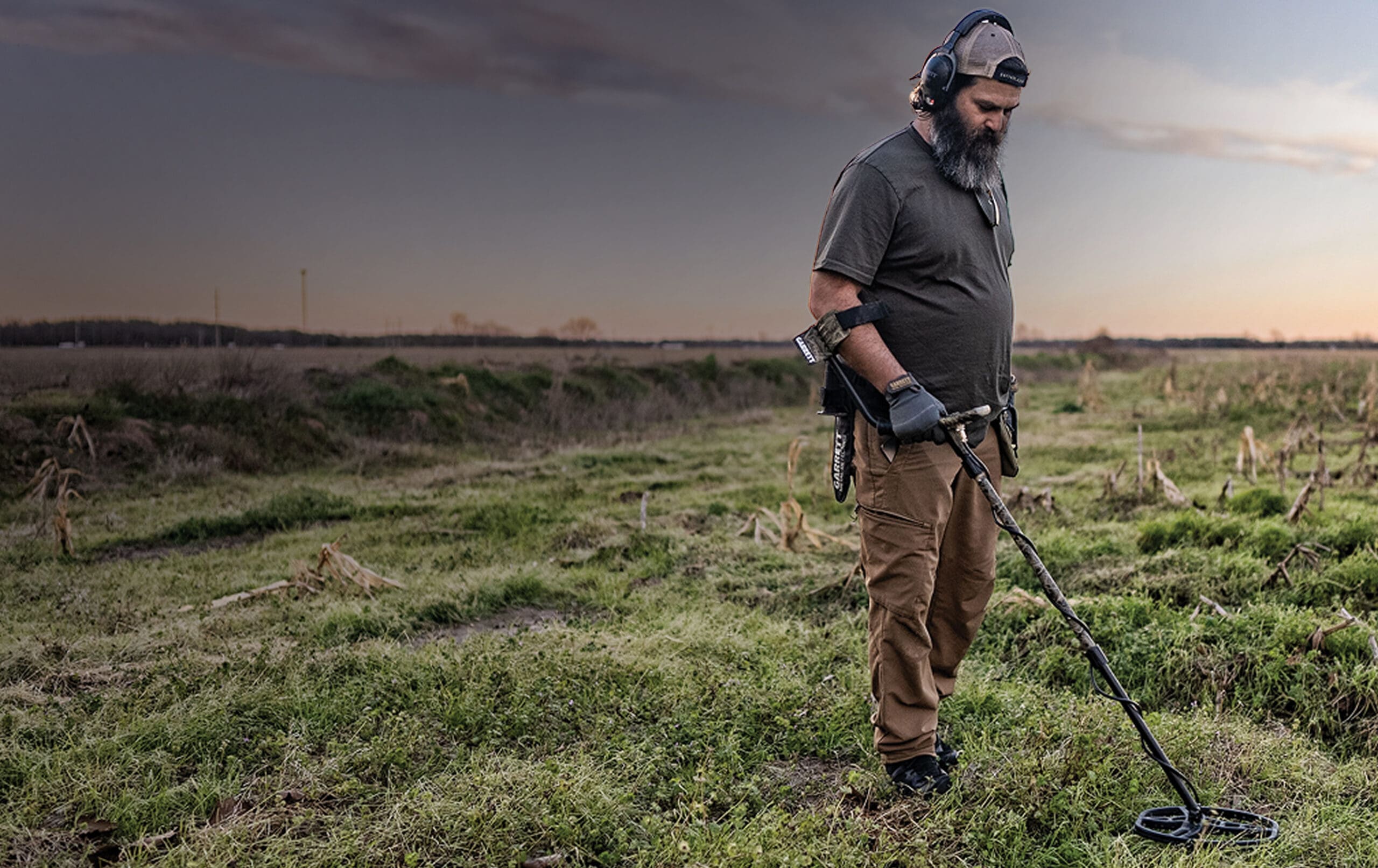
Gold is found in nature primarily in rocks, quartz veins, rivers, streams, and creeks, as well as in soil, sediment, and trace amounts in seawater. Understanding where gold is found in nature requires examining how gold occurs within rock, sediment, and water systems. For those interested in exploring these environments firsthand, Garrett provides specialized metal detection equipment designed to help locate gold in natural settings.
Unlike many other metals, gold does not corrode or chemically break down. This stability allows gold particles to remain intact despite exposure to weathering, erosion, and water movement. As a result, gold can persist in natural environments for millions of years and become concentrated into identifiable gold deposits.
Gold formation occurs through complex geological processes involving heat, pressure, and hydrothermal fluids migrating through fractures in surrounding rock. These processes gradually concentrate gold into specific zones rather than dispersing it evenly throughout the Earth. Over time, erosion exposes these deposits or redistributes gold toward the Earth’s surface.
Key Takeaways:
- Gold is found in nature within rocks, quartz veins, rivers, streams, soil, sediment, and trace amounts in seawater.
- Primary gold deposits form deep underground through heat, pressure, and hydrothermal activity.
- Erosion releases gold from rock and redistributes it into rivers and creeks as placer deposits.
- Because gold is extremely dense, it settles in stream beds, cracks, and natural traps.
- Most gold in soil and sediment exists as microscopic particles invisible to the naked eye.
- Garrett metal detectors are designed to help locate gold in natural environments like stream beds and mineralized ground.
Understanding How Gold Occurs Naturally
Gold is a naturally occurring element identified by the chemical symbol Au. It belongs to the group of precious metals due to its rarity, density, and resistance to chemical reaction. Gold occurs as a native metal, meaning it is often found in pure form rather than bonded with other elements.
Most of the planet’s gold formed billions of years ago through rapid neutron capture during stellar events that predate Earth itself. During Earth’s early development, heavy elements such as gold migrated toward the core. Only a small portion remained accessible within the Earth’s crust.
The gold found today near the surface was later transported upward by tectonic activity, volcanic processes, and hydrothermal circulation. These geological forces concentrated gold into specific geological settings rather than distributing it evenly.
Gold typically occurs in two principal forms. Visible gold includes flakes, veins, and gold nuggets, while microscopic particles are locked within gold ore and require processing for recovery. Both forms contribute to global gold production and total gold production figures reported by mining industries.
Gold Found in Rocks (Primary Gold Deposits)
What Primary Gold Deposits Are
Primary gold deposits, also known as lode deposits or hard rock deposits, form when gold remains trapped within solid rock. These deposits represent the original location of gold deposition prior to erosion.
Gold is concentrated when hydrothermal fluids transport dissolved metals through fractures in bedrock. As pressure and temperature decrease, gold precipitates from solution and becomes embedded within mineralized zones, forming gold-bearing veins.
Quartz Veins as a Natural Gold Host
Quartz veins are among the most common natural hosts for gold. As mineral-rich fluids move through fractures, quartz crystallizes simultaneously with gold during cooling.
Gold within quartz veins may appear as fine gold particles, visible streaks, or embedded mineral gold. Iron staining, fractured quartz, and altered surrounding rock are frequently associated with gold-bearing structures.
Igneous and Metamorphic Rock Environments
Gold is commonly associated with igneous and metamorphic rocks formed under extreme heat and pressure. These geological settings allow hydrothermal processes to mobilize and concentrate metals.
Significant gold systems occur in greenstone belts and major mineral trends such as the Carlin Trend, which hosts large volumes of microscopic gold. These environments often contain other minerals and other valuable metals, including copper and, in some cases, platinum group metals.
How Gold Is Released From Rock Over Time
Weathering gradually breaks down gold-bearing rock through temperature changes, water exposure, and chemical interaction. As rock disintegrates, gold particles are released.
Due to its high density, gold does not travel far once freed. Gravity causes it to settle quickly, linking hard rock deposits to surface-based systems.
This process allows gold originally formed underground to migrate toward the Earth’s surface and eventually form secondary deposits.
Gold Found in Rivers and Streams (Placer Deposits)
What Placer Gold Is
Placer gold refers to gold that has been eroded from its original rock source and transported by water. These placer deposits consist of loose material rather than solid rock.
Placer gold commonly appears as flakes, grains, or rounded gold nuggets. This form of alluvial gold has been naturally separated from surrounding minerals through erosion.
How Gold Travels From Rock to Water
Once erosion releases gold from rock, gravity and water movement transport it downhill. Rainfall, snowmelt, and surface runoff carry gold into creeks and rivers.
Because gold is extremely dense, it settles rapidly while lighter materials remain in suspension. This limited movement explains why placer gold is typically found close to its original source area.
Common River and Stream Locations Where Gold Settles
Gold commonly accumulates in stream beds, riverbeds, gravel layers, and alluvial deposits where water flow slows. These environments allow heavy minerals to drop out of suspension.
Natural traps such as bedrock cracks, behind large boulders, and along inside river bends often contain higher gold concentrations.
Why Gold Sinks to the Bottom
Gold is classified among heavy elements due to its exceptional density. Flowing water naturally sorts material by weight.
Lighter materials such as sand, silt, and clay are carried downstream, while heavy minerals including gold settle to the bottom. This sorting process forms natural concentration zones.
Gold Found in Soil and Sediment
Gold is also found within soil and sedimentary deposits formed through prolonged weathering. Soil-based gold is usually dispersed and difficult to detect but remains important for exploration.
How Gold Enters Soil
Gold enters soil when gold-bearing rock breaks down. Released particles mix with surface material and are transported downslope by gravity and water movement. This process often creates dispersion patterns that guide exploration activities.
Types of Soil and Sediment Containing Gold
Gold may be present in soil, sand, and clay. Sandy and gravel-rich materials allow water movement and are more likely to host recoverable alluvial gold. Clay-rich material may contain microscopic particles, though separation is more difficult.
Why Most Soil Gold Is Invisible
Most soil gold exists as microscopic particles invisible to the naked eye. Laboratory analysis is required to evaluate gold grades and determine economic potential. While trace gold is widespread, only higher gold concentrations justify extracting gold through mining.
Natural Forms Gold Takes in the Environment
Gold occurs in several physical forms, including gold flakes, gold nuggets, microscopic gold, and mineral-embedded gold. Each form requires different mining technology and recovery techniques depending on deposit type.
Why Gold Is Rare but Widely Distributed
Gold is rare within the Earth’s crust, yet it is widely distributed through natural recycling processes. Erosion, sediment transport, and tectonic movement redistribute gold across landscapes.
Many regions contain trace gold, but only a limited number contain concentrations sufficient for mining. Geological conditions, political factors, and economic considerations all influence whether deposits are developed.
How Garrett Can Help You Find Gold in Nature
If you’re wondering where gold is found in nature and how to begin finding gold yourself, reliable tools make all the difference. Garrett has been a trusted name in metal detection and gold prospecting gear for decades.
Our detectors are specifically designed to help hobbyists and serious prospectors locate gold particles, gold nuggets, and other valuable metals in soil, sediment, stream beds, and placer deposits with confidence.
One standout option is our Garrett Goldmaster 24k, built for gold detection across varied geological settings. This detector features advanced sensitivity to low-concentration gold and the ability to distinguish targets in complex ground conditions, making the process of finding gold more effective.
Whether you’re exploring historic gold rush areas or testing soil near quartz veins, our equipment supports your journey into gold deposits and placer gold prospecting with proven performance.
Recap: Where Gold Is Found In Nature
Gold is found in nature within solid rock, soil, sediment, rivers, streams, and trace amounts in seawater. Primary deposits form underground, while secondary placer deposits develop after erosion redistributes gold toward the surface.
Over millions of years, heat, pressure, water, and gravity have shaped gold distribution across the planet. These processes explain why gold is widespread in small quantities yet concentrated enough to mine only in specific geological environments.If you have any questions about finding gold in natural environments or choosing the right Garrett metal detector for your needs, contact Garrett. Our team is happy to help guide you in the right direction.