
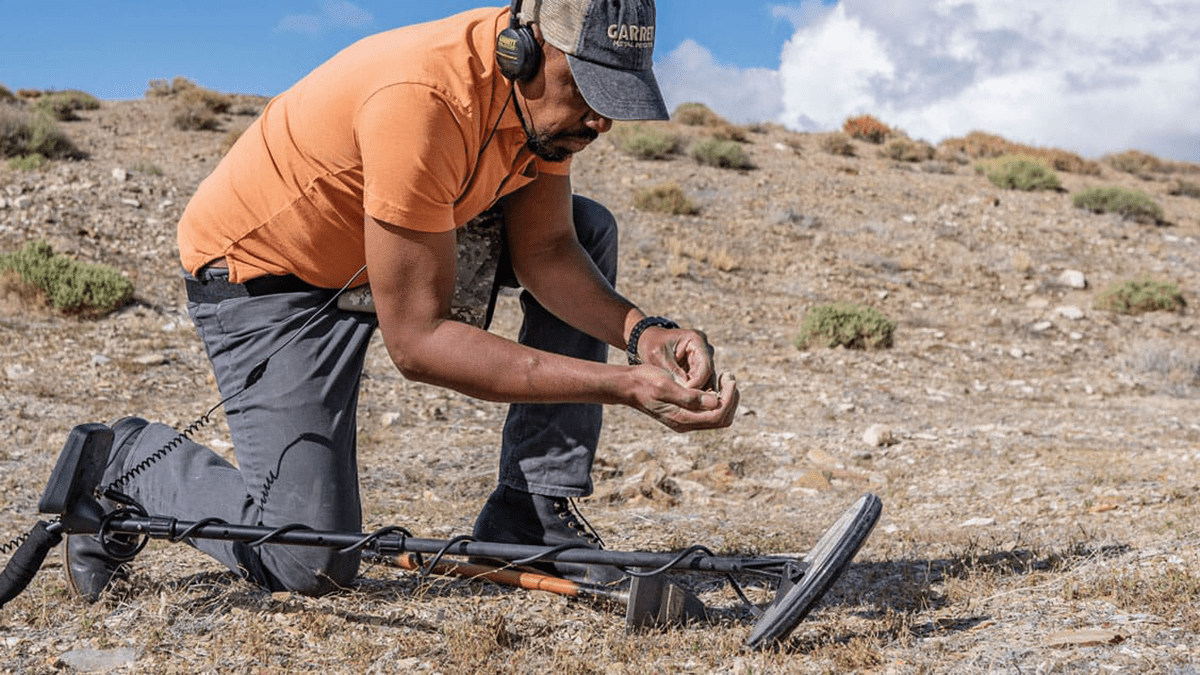
If you have ever gone metal detecting and gotten nothing but constant beeping with no treasure to show for it, the problem is probably not your detector. It is more likely an issue with ground balance, a setting that many beginners overlook or do not fully understand. Getting this one setting right can be the difference between a frustrating walk through a field and a pocket full of real finds.
At Garrett, we have spent decades building and perfecting metal detectors and helping hunters of every skill level get the most out of them, so we know how confusing ground balance can feel when you are just starting out. In this guide, our team will explain what ground balance actually does, why the soil beneath your feet affects your results so much, and how to set your detector up correctly no matter where you are hunting.
Key Takeaways
- Ground balance filters out mineral interference so your detector can focus on real targets instead of false signals from soil.
- Soil type determines your settings, since clay, desert, and coastal sand each present different mineral challenges that affect performance.
- There are four main modes, automatic, manual, tracking, and preset/fixed, each suited to different skill levels and hunting conditions.
- Warning signs like constant chatter, jumpy Target ID readings, or reduced depth mean your detector needs rebalancing.
- Proper ground balance leads to deeper, more accurate finds and fewer wasted digs on trash or hot rocks.
- Garrett builds ground balance options into detectors across its lineup, from beginner friendly models to more advanced models with precise manual control.
What Exactly Is Ground Balance?
Ground balance is the setting on a metal detector that tells the machine to ignore natural minerals in the soil so it can focus on real targets like coins, jewelry, and relics. Without it, iron and other minerals in the dirt create false signals that make hunting frustrating and slow. Setting it correctly is one of the most important steps for finding more targets at greater depth.
Think of ground balance like tuning out static on an old radio so you can hear the song clearly. Once you understand this idea, other terms will start to make sense too, including VDI (Visual Discrimination Indicator) and ground noise, which are both words hunters use when they talk about how a detector reads the soil and separates it from a real target.
How Ground Balance Works
What’s Actually in the Soil
Every patch of ground has a mix of iron particles, natural minerals, and mineralized rock buried in it. These materials give off a weak signal of their own, and a detector has to be told to ignore that signal so it does not mistake dirt for treasure. Wet sand at the beach adds another layer to this problem because salt content conducts electricity and can trick a detector into thinking there is metal nearby.
Soil is not the same everywhere you go, which is why ground balance settings often need to change from place to place. Clay-heavy soil, desert ground, and coastal sand all carry different amounts and types of minerals. A setting that works perfectly in a dry inland field may cause constant false signals on a mineral-rich beach.
| Soil Type | Common Minerals | Typical Challenge |
| Clay-heavy soil | Iron oxide, dense clay minerals | Strong ground signal, reduced depth |
| Desert soil | Mineralized rock, hot rocks | Sharp, unpredictable false signals |
| Coastal wet sand | Salt, black sand (magnetite) | High conductivity mimics metal targets |
| Average inland soil | Low to moderate mineral content | Usually easiest to balance |
As you can see, the soil under your feet plays a big role in how well your detector performs before you even turn it on. Knowing which category your hunting spot falls into can help you set your expectations and choose the right ground balance mode from the start. No matter which soil type you are working with, a properly balanced detector will always perform better than one left on a generic setting.
Why the Ground “Confuses” Your Detector
A metal detector works by sending out a magnetic field and reading how that field reacts when it touches something in the ground. Minerals in the soil react to that field almost the same way metal does, so the detector can struggle to tell the difference between a rock full of iron and an actual coin. This reaction is what causes the chatter and false beeps that new hunters often blame on a broken machine, and it can vary depending on the type of detector technology being used.
The real issue is usually a matter of scale. A tiny buried ring gives off a small signal, but the soil around it can be made up of tons of mineral content spread across a wide area. That much ground signal can easily drown out a small target signal unless the detector has been balanced to filter it out first.
Signs Your Detector Is Not Ground Balanced Properly
A detector that is out of balance usually gives clear warning signs while you are swinging the coil. Learning to notice these signs early can save you hours of frustration in the field and help you fix the problem before it ruins a hunting trip. Watch for these common signs:
- Constant chatter or false signals even when no target is nearby
- Target ID numbers that jump around instead of staying steady on real finds
- A noticeable drop in depth on targets you know are buried
- The detector goes silent in spots or squeals nonstop without a target present
If any of these signs sound familiar, there is a good chance your ground balance needs to be adjusted before you keep hunting. Ignoring these warning signs often leads hunters to dig up nothing but trash or walk right past real targets. Taking a few minutes to rebalance can quickly turn a frustrating outing back into a productive one.
The 4 Main Types of Ground Balance (and When to Use Each)
Automatic Ground Balance
Automatic ground balance is best for beginners, quick setup, and hunting in areas where soil conditions change often. In this mode, the detector samples the ground on its own and adjusts its settings without asking the user to do anything by hand. It is fast, simple, and forgiving for someone still learning how their machine works.
The tradeoff is precision. Automatic ground balance usually gives a good average setting, but it may not be exact enough for heavily mineralized ground like gold-bearing soil. In those tougher conditions, hunters often need a more hands-on approach to get a clean, quiet signal.
Automatic ground balance still requires occasional recalibration from the user when soil conditions change – it’s not entirely hands-free. That said, it remains a very easy feature to use, requiring far less effort and skill than manual ground balancing. Here is a simple walkthrough for using automatic ground balance:
- Find a patch of ground that you know is free of buried targets
- Pump the search coil up and down a set distance above the soil
- Continue pumping the coil near the soil until the audio response flattens out; the detector is automatically making the adjustments while you hold down the Ground Balance button and pump the coil.
- Re-test over a known target to confirm the setting is accurate
The Vortex VX5, VX7, and VX9 from our team at Garrett all feature dependable automatic ground balance, giving hunters at every level a strong starting point right out of the box. As you move up through the Vortex lineup, you also gain access to more advanced controls and manual adjustment options, so your detector can grow alongside your skills as you take on tougher hunting conditions.
Manual Ground Balance
Manual ground balance is best suited for highly mineralized soil, experienced users, and gold prospecting, where precision really matters. This mode puts the hunter in full control instead of leaving the adjustment up to the machine. It takes a little practice, but it rewards the user with a much cleaner signal in tough ground. Here is a simple walkthrough for setting manual ground balance:
- Find a patch of ground that you know is free of buried targets
- Pump the search coil up and down a set distance above the soil
- Adjust the ground balance setting manually until the audio response flattens out
- Re-test over a known target to confirm the setting is accurate
Manual balance takes more effort than automatic mode, but it gives the most control over exactly how the search coil reads the soil beneath it.
Our engineers at Garrett designed the AT Gold and Garrett Axiom with serious gold hunters in mind, giving them the precise manual ground balance control needed to cut through heavily mineralized soil. Both detectors let experienced users fine-tune their settings down to the smallest detail.
Tracking Ground Balance
Tracking ground balance works well at sites where soil composition changes as you walk, such as parks, riverbanks, and wooded trails. Instead of setting the balance once and leaving it alone, this mode continuously adjusts in the background as conditions shift under the coil.
This convenience comes with a small tradeoff. Tracking mode is generally easier to use than manual balancing, but it can sacrifice a bit of depth compared to a locked manual setting that has been fine-tuned for one specific spot.
At Garrett, we equipped the Goldmaster 24k with tracking ground balance so hunters moving across changing terrain never have to stop and manually rebalance every few steps. This makes it a great fit for prospectors covering riverbanks, washes, and other spots where mineral content shifts often, giving you steady performance without slowing down your hunt.
Preset/Fixed Ground Balance
Preset or fixed ground balance is common on entry-level machines built for casual and beginner hunters. Manufacturers set these detectors to an average mineral level that works reasonably well in a wide range of common soil types without any adjustment needed from the user.
The downside shows up in extreme conditions. A fixed setting can struggle in highly mineralized dirt or salty coastal sand, since it was never designed to adjust for those specific conditions in the first place.
Our ACE 250 and ACE 300 models at Garrett use preset ground balance to keep things simple for hunters who are just getting started. We designed both detectors around an average mineral setting that performs well across most parks, yards, and fields, so beginners can focus on learning the basics without worrying about fine-tuning a setting they may not fully understand yet.
How to Ground Balance Your Metal Detector (General Steps)
The exact process varies slightly by brand and model, but the basic steps stay the same across most detectors on the market today.
- Choose a clear, target-free spot that represents the area you plan to hunt
- Select your ground balance mode, whether automatic, manual, or tracking
- Follow your detector’s calibration prompt or pumping motion as instructed
- Confirm the threshold sounds smooth and quiet with no chatter present
- Re-balance again if you move to soil that feels noticeably different
Tip: Re-check your ground balance after it rains or whenever you switch to a new hunting location, since moisture and mineral content can change quickly. For more general field advice, these metal detecting tips cover other habits worth building early on.
Ground Balance Mistakes to Avoid
Even experienced hunters slip up on ground balance from time to time, and these mistakes can quietly cost you finds without you realizing it. Knowing what to watch for makes the whole process much smoother.
- Balancing over a spot that secretly has a buried target hidden nearby
- Forgetting to re-balance when moving between soil types, like a dry field to wet beach sand
- Confusing ground balance with sensitivity or discrimination settings
- Assuming tracking mode can be set once and forgotten without periodic checks
Most of these mistakes are easy to avoid once you know what to look for. A few extra seconds spent double checking your balance spot or your settings can save you from missing good targets later on. Building these small habits into your routine will make ground balancing feel automatic in no time.
Ground Balance vs. Sensitivity vs. Discrimination (Quick Comparison)
These three settings get mixed up often because they all affect how a detector sounds while you swing it. They control very different things, though, and mixing them up is one of the most common reasons hunters struggle to fix a problem in the field.
Ground balance controls how the detector reads mineral content in the soil, sensitivity controls how strong of a signal is needed before the detector reacts, and discrimination controls which types of metal the detector will accept or ignore. Adjusting the wrong setting will not solve a ground noise problem, since only ground balance is built to filter out mineral interference.
| Setting | What It Actually Controls | Fixes Ground Noise? |
| Ground balance | How the detector filters natural mineral signals | Yes |
| Sensitivity | How strong a signal must be to trigger a response | No |
| Discrimination | Which metal types are accepted or rejected | No |
Why Getting Ground Balance Right Improves Your Finds
Proper ground balance leads directly to deeper detection, since the machine is no longer wasting its effort fighting mineral interference. Deeper, cleaner readings mean older and more valuable targets that other hunters may have missed with a poorly tuned machine, including gold that hides in mineralized ground.
It also improves the reliability of your Target ID and VDI readings, which helps you decide what is worth digging. On top of that, a well-balanced detector causes less ear fatigue from constant chatter and results in far fewer wasted digs on trash and hot rocks.
Recap: What is Ground Balance in Metal Detecting?
Ground balance is one of the foundational settings that separates a frustrating day in the field from a productive one. Once it is set correctly for the soil you are standing on, your detector can finally show you what it is truly capable of finding. This single setting affects everything else your detector does, from depth to accuracy, which is why it deserves attention every time you head out.
Take a few minutes before your next hunt to check your manual for your specific model’s ground balance mode, since the exact steps can vary from one detector to the next. Whether you hunt in mineral-rich soil, wet coastal sand, or an average inland park, understanding this one setting will make every trip more rewarding. A little bit of practice now will pay off with deeper, more reliable finds for years to come.
Not sure which detector fits the areas you hunt or your current skill level? Reach out to our team at Garrett and we will be glad to walk you through the right options for your specific needs.