
Every security professional understands a hard truth: waiting until a weapon is inside a building is often too late. Proactive weapon detection focuses on identifying threats before they reach entry points, classrooms, or crowded spaces, rather than reacting after violence has already started. This move from reaction to prevention has become the foundation of modern facility security planning.
There are three main categories of weapon detection that work together to close security gaps. These include visual and technology based detection, physical screening methods, and human or behavioral monitoring. At Garrett, we’ve been in the metal detector business for over 60 years. Our team will walk through each category, explain how they work, and outline the layered approach that gives facilities the best chance of stopping a threat before it turns into tragedy.
Key Takeaways
- Weapon detection works best when it happens before a threat reaches a building, not after, since most attackers show warning signs during a “pre-incident phase.”
- AI powered camera systems can scan existing CCTV feeds to flag firearms in parking lots and entryways within seconds.
- Physical screening methods like walk-through detectors, handheld wands, and canine units each serve different situations, from high foot traffic entrances to high-risk events.
- Human vigilance and threat assessment teams remain essential because they can catch warning signs during the planning stages, long before a weapon appears on camera.
- The strongest security programs layer visual technology, physical screening, and behavioral monitoring together rather than relying on any single method.
- Garrett’s Paragon and Guide devices offer facilities both continuous entry screening and portable secondary checks.
Why Early Weapon Detection Matters
The Difference Between Prevention and Response
Security planning generally falls into two categories. Most facilities build their safety plans around one of these categories without realizing how much the other one can add. Understanding the difference between them is the first step toward building a program that actually prevents harm instead of just responding to it.
- Reactive measures, such as lockdown procedures and active shooter drills, respond to a threat after it has already entered a facility
- Proactive measures, such as weapon detection before entry, aim to stop a threat before it ever reaches the building
Both types of measures play an important role in a complete safety plan. Reactive measures prepare people to respond quickly once danger is confirmed inside a building. Proactive measures work earlier in the timeline, giving security teams a chance to act before that danger ever arrives.
The Window of Opportunity
Research into past active shooter incidents shows that most attackers display some kind of warning sign before acting, whether through behavior, communication, or by carrying a visible weapon. This period before an attack is often called the pre-incident phase, and it represents the best chance to prevent violence altogether.
During this window, detection technology, physical screening, and observant staff can all play a role in identifying a threat. The earlier a weapon or warning sign is spotted, the more options responders have, from a discreet security check to a full lockdown before anyone enters the building.
Visual Gun Detection Technology
How AI-Powered Camera Systems Work
AI powered systems connect to a facility’s existing camera network to analyze video feeds in real time, part of broader weapon detection systems. The software recognizes firearm shapes and flags them within seconds, far faster than a human monitor. The table below shows how this fits into a facility’s existing setup.
| Component | Function |
| Existing CCTV cameras | Provide the video feed used for analysis |
| Detection software | Scans footage using trained object recognition models |
| Alert dashboard | Displays flagged images for human confirmation |
| Notification system | Sends alerts to security staff and law enforcement |
What These Systems Can Identify
Modern visual detection software recognizes handguns, rifles, and other long guns, including weapons that have been drawn or brandished, which is often a stronger indicator of danger than what these tools can detect in a concealed item.
These systems are commonly placed in parking lots, entryways, and hallways, where a person is most likely to display a weapon before entering a building. Coverage of these zones gives a facility multiple chances to catch a threat before it moves further inside.
Benefits and Limitations
The biggest advantage of visual detection technology is speed. A well trained system identifies weapons far faster than a person watching a bank of monitors, and it does not get tired or distracted during a long shift. That said, these systems are not perfect. False positives can occur when an object resembles a weapon, and more advanced systems with wider coverage require a larger upfront investment.
Concealed Weapon Screening Methods
Walk-Through Metal Detection Systems
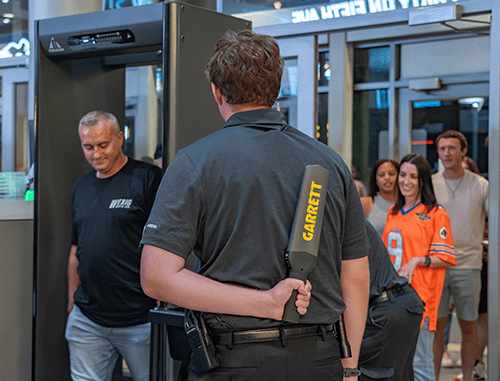
Walk-through metal detectors use electromagnetic sensors to identify metal objects as a person passes through, without requiring them to empty their pockets first. This makes them well suited for locations with heavy visitor volume, and industry-leading systems like the Paragon from our team at Garrett are built for this kind of high volume screening at schools, stadiums, and office buildings.
Because these systems keep foot traffic moving rather than slowing it down, they have become a common choice for busy facilities. They work best when paired with a clear staffing plan so that any alert can be addressed right away.
If your facility is exploring entry screening options, the Garrett Paragon is worth a look as you weigh what fits your space and traffic patterns.
Handheld Detection Devices
Handheld metal detectors serve a different purpose than walk-through systems. They are often used as roaming detection tools or as a secondary screening tool when a walk-through detector triggers an alert, and many teams weigh the tradeoffs between the two formats before deciding how to staff an entrance.
Their portability also makes them useful for temporary events or locations that do not have permanent screening equipment installed. A single handheld unit, such as the Garrett Guide, can be moved between entrances or used at pop-up checkpoints, and picking the right wand for a given facility often comes down to sensitivity settings and battery life.
These systems are strongest and most efficient when operating together in a primary/secondary configuration – the walk-through unit handling initial, high-throughput screening while the handheld detector pinpoints the exact location of an alarm on an individual who has already triggered it. This combination reduces false alarms at the walk-through stage from becoming full pat-downs, keeping lines moving while still resolving each alert with precision.
If your team needs a reliable secondary screening option, the Garrett Guide is a strong choice for part of your broader detection plan.
Canine Detection Units
Trained detection dogs offer a different kind of screening that focuses on scent rather than metal content. These canine units are specially trained to identify firearms and explosives, and they are often used at high-risk events where a broader search is needed.
One advantage of canine units is mobility. Unlike a walk-through or ceiling-mounted camera, a trained dog and handler can move through a crowd, a parking area, or a large venue, which gives facilities flexibility that stationary equipment cannot match.
Choosing the Right Screening Method for Your Facility
Selecting the right screening approach depends on foot traffic, facility type, budget, and risk level. Venues expecting large crowds often work through a checklist built for stadiums and arenas before settling on equipment. The table below compares the three main screening methods.
| Method | Best For | Key Advantage |
| Walk-through detectors | High foot traffic locations | Fast, continuous screening |
| Handheld devices | Secondary or temporary screening | Portable and low cost |
| Canine units | High-risk events | Mobile scent-based detection |
Behavioral Threat Detection and Human Monitoring
Building a Threat Assessment Team
Technology alone cannot catch every warning sign, which is why many facilities build a dedicated threat assessment team trained to spot red flags like aggressive posture or erratic movement.
These teams work best when coordinated with security personnel and existing technology, so a concerning observation does not get lost or ignored. This is one reason many campuses invest in layered protection for students that pairs staff training with equipment.
Creating a Culture of Reporting
A threat assessment team can only act on information it receives, so building a strong reporting culture is essential. Anonymous tip lines and training programs help people know what is worth reporting.
This also includes watching for warning signs outside the building, like concerning social media activity. People are more likely to speak up when they trust reports will be handled discreetly, much like the habits that help catch dishonest behavior early in a workplace.
Why Human Vigilance Complements Technology
Cameras and metal detectors are designed to catch a weapon at the moment it becomes visible or passes through a checkpoint. Human observers, on the other hand, can sometimes catch warning signs during the planning stages of an attack, long before a weapon ever appears on camera.
This is why behavioral monitoring is considered a critical layer rather than an optional add-on. A person who notices a coworker’s sudden change in behavior or a troubling comment may be catching a threat at a stage no camera system is designed to detect.
Combining Technology and Human Vigilance: A Layered Security Approach
Building a Multi-Layered Detection Strategy
The most effective weapon detection programs do not rely on a single method. Instead, they combine multiple layers of protection that each cover a different point in a potential threat’s path. This layered structure is what separates a truly comprehensive security program from one built around a single tool.
- Perimeter layer: visual detection technology monitors parking lots and building approaches
- Entry point layer: screening methods check people and belongings as they enter
- Ongoing layer: behavioral monitoring watches for warning signs throughout the day
Each layer covers a different stage of a potential threat and catches problems the other layers might miss. A weapon that slips past the perimeter camera may still be caught at the screening checkpoint. If both of those layers miss something, alert staff and trained observers provide one more chance to intervene before harm occurs.
Integration Best Practices
Making these layers work together requires more than just installing separate systems side by side. Centralizing alerts into a single dashboard allows security staff to see camera flags, screening alerts, and reported concerns in one place, rather than checking multiple systems separately.
Facilities also benefit from training staff on all three layers, not just the one closest to their role. Regular drills and security audits help identify gaps in the system and confirm that each layer is functioning the way it was designed to, an approach that mirrors how large public events prepare for securing crowded venues months in advance.
Weapon Detection Methods at a Glance
Every facility has different needs, which makes it helpful to compare detection methods side by side. This is especially true for organizations overseeing sensitive sites, like protecting government facilities or other high-security environments.
| Method | Category | Best Use | Key Strength |
| AI camera detection | Visual technology | Perimeter and entryways | Identifies threats before entry |
| Walk-through detectors | Physical screening | High foot traffic entrances | Fast, continuous screening |
| Handheld devices | Physical screening | Secondary or temporary checks | Portable and low cost |
| Canine units | Physical screening | High-risk events | Mobile scent-based detection |
| Behavioral monitoring | Human vigilance | Ongoing, facility-wide | Catches pre-planning warning signs |
No single method on this list can catch every threat on its own. The strongest security programs draw from more than one row in this table, layering methods based on risk level and available resources. Facilities that take this comparison seriously are better positioned to choose tools that actually match their needs.
Stopping a Threat Before It Escalates
Fast, accurate screening equipment plays a direct role in identifying a weapon before someone with harmful intent can act on it. These detectors from our team at Garrett are built specifically to help security teams catch these threats at the entrance and in the field.
Garrett Paragon
The Garrett Paragon gives security teams a reliable way to catch a weapon the moment someone tries to bring it through the door. Its precision and speed make it well suited for schools, stadiums, and offices where stopping a threat before entry can prevent a situation from ever developing.
- 66 detection zones across 22 horizontal bands for left, center, and right identification
- 200 adjustable sensitivity levels with 23 or more pre-configured security programs
- Bilateral dual-sided scanning that eliminates blind spots and single-sided falloff
- IP65 rated construction suitable for both indoor and outdoor entrances
By identifying exactly where a weapon is located on a person, the Paragon helps staff act quickly and with confidence instead of losing critical seconds. That speed can make the difference between stopping a threat at the door and having it reach further inside a building.
Garrett Guide
The Garrett Guide gives security teams a portable way to check for weapons anywhere a fixed detector cannot reach. It is especially useful during periods of elevated threat, when a facility needs to screen quickly at multiple points without a permanent setup.
- 7 selectable sensitivity levels for adjusting detection precision
- Interference control settings to reduce false alerts near rebar or flooring
- Military-spec drop test durability paired with IP65 water and dust resistance
- USB-C rechargeable battery offering more than 125 hours of runtime
Because it can move between entrances or serve as a secondary check after an alert, the Guide helps close gaps that a single fixed system might miss. In a fast-moving situation, that flexibility can give staff the extra layer of confirmation needed to respond before a threat gets worse.
How to Detect Weapons Before an Active Shooter Incident
Protecting a facility from weapon-related violence depends on more than a single tool or checkpoint. A strong program combines visual detection technology to catch threats before they reach the door, physical screening methods to check people as they enter, and behavioral monitoring to catch warning signs that technology alone cannot see.
Building this kind of layered approach takes planning, but it does not have to be overwhelming. Facilities ready to strengthen their security should consult with a qualified security provider, assess their current risk level, and take the first step toward a safer environment for everyone who walks through their doors.
Ready to build a stronger security program? Check out our security detectors or contact our team at Garrett for help choosing the right solution for your facility.