
At Garrett, we build our crime scene metal detectors with direct input from law enforcement. Every design choice we make focuses on three goals: durability that holds up in harsh conditions, the ability to adapt to any terrain, and detection tuned for evidence instead of coins or relics. We want agencies to understand exactly how our equipment comes to life.
That starts with the unique problems investigators face at crime scenes, moves through the way we partner with the people who work those scenes, and ends with the features we built to solve their biggest challenges. We will also share how those features come together during a real search, because that is where our design work proves itself.
Key Takeaways
- Crime scene detectors need to find evidence like bullets, casings, and weapons while ignoring common iron trash.
- Law enforcement input shapes every design choice, from durability to speed and accuracy.
- The Vortex CSI includes Bullets and Steel Casings modes that cut down on wasted digs and scene disturbance.
- Multiple frequency technology keeps signals steady in mineralized soil, trashy urban lots, and saltwater.
- A waterproof build to 16 feet lets teams search land, mud, and water with one tool.
- Garrett pairs the detector with the PRO-Pointer AT Blackline Edition to speed up recovery and keep dig holes small.
Why Crime Scene Recovery Needs a Purpose-Built Detector
A crime scene is not a quiet beach or an empty park. It is often a busy, messy space where every minute counts and every piece of evidence matters. Investigators may be working against weather, fading daylight, or public pressure to clear a road or neighborhood. They need a tool that finds what is important and ignores what is not.
General-purpose detectors were never built for that job. They tend to treat most metal the same way, which leaves CSI teams digging up junk while the real evidence waits. Over a large search area, that wasted effort adds up to hours of lost time. We believe a purpose-built detector should solve that problem at the design stage, long before it ever reaches the field.
The Evidence Investigators Are Searching For
Metallic evidence can tell the story of what happened at a scene. A single lead bullet or casing can help confirm a shooter’s position, the number of shots fired, or the type of weapon used, and a discarded firearm can link a suspect to a crime. When we design a detector for this work, we focus on the targets investigators search for most often:
- Fired lead bullets
- Brass and steel shell casings
- Discarded handguns
- Hidden contraband
Each of these targets brings its own challenge. Bullets may be deformed, buried, or lodged in soil and debris. Casings can scatter far from where they were ejected, and weapons are often thrown into brush or water to hide them. Helping teams find every one of these items quickly and intact is the goal behind every crime scene detector we build.
The Trash Problem at Real-World Scenes
Most outdoor scenes are full of common iron debris. Nails and bottle caps are the biggest offenders, and in an urban lot, a parking area, or a roadside ditch, a team may find dozens of these items for every piece of real evidence. Hobby detectors are designed to find treasure, not to protect a scene, so they are not tuned to handle this kind of trash. Here is how the two types of detectors compare.
| Feature | Hobby Detector | Crime Scene Detector |
| Main purpose | Coins, jewelry, relics | Bullets, casings, weapons |
| Iron trash handling | General settings | Modes built to filter iron trash |
| Discrimination focus | Broad treasure targets | Non-ferrous: Lead and brass |
| Scene impact | More digging, more disturbance | Fewer digs, cleaner recovery |
Those differences matter because every false signal leads to an unnecessary dig. Each one slows the search down and pulls attention away from the real evidence. Extra digging also creates a risk of disturbing the scene or damaging nearby evidence, which can affect how that evidence holds up later.
Designed With Law Enforcement, Not Just for It
We do not guess what investigators need. We ask them. The people who search for evidence in mud, rain, and darkness know which features help and which ones get in the way. That partnership has shaped our crime scene products for years, so every new model reflects real lessons from the field.
Collaboration With Field Personnel
Input from investigators drives three main priorities for our engineers: durability, speed, and accuracy. A detector has to survive rough handling, cover ground fast, and give signals that teams can trust. When any one of those fails, the whole search suffers. A unit that breaks, drags, or gives confusing signals can cost a team valuable time.
We take feedback seriously and turn it into engineering decisions. If officers tell us a unit is hard to use with gloves, or that trash signals waste their time, those problems become design goals for our next model. This process turns everyday frustrations into practical improvements that make the next search smoother.
A Lineage of Crime Scene Tools
Our Vortex CSI detector reflects our long-term commitment to crime scene investigation. We made it available for sale and shipment worldwide this year, and it brings together years of feedback from the investigators who rely on our equipment. Every detail was shaped by what CSI teams told us they needed most at real scenes.
For the final step of recovery, we recommend pairing the Vortex CSI with our PRO-Pointer AT Blackline Edition handheld pinpointer. The detector finds the general area, and the pinpointer narrows in on the exact spot. Working together, they speed up the recovery of metallic evidence while keeping digging to a minimum.
Key Design and Engineering Features
Every feature on the Vortex CSI exists for a reason. Investigators told us what slowed them down, and we built the answers into the hardware and software. Together, these features create a detector that performs where ordinary units struggle, from crowded city lots to riverbanks.
Specialized Search Modes for Evidence
We built a pre-programmed Bullets mode and a Steel Casing mode into the Vortex CSI. These modes are ready to use the moment the detector turns on. There is no need for long setup or guesswork in the field, which matters when teams arrive at a scene and need to start right away.
These modes filter out iron trash like nails and bottle caps. At the same time, they keep high sensitivity to lead and non-ferrous brass, which are the metals most often found in bullets and casings. The result is fewer wasted digs, less disturbance to the scene, and faster evidence recovery overall.
Multi-Frequency Technology for Tough Ground
The Vortex CSI runs on our broad-bandwidth digital platform, MD-MF. This platform sends out multiple frequencies at once instead of relying on just one. That helps the detector stay stable when mineralized ground is working against it, which happens more often than many people expect. We designed this technology to handle three tough conditions:
- Mineralized soils
- High-trash urban lots
- Saltwater interference
The main benefit is that target depth and accuracy are maintained, even when ground conditions change during a search. Investigators can move from one type of terrain to another without losing confidence in their signals.
Waterproof, All-Terrain Construction
Evidence does not always land on dry ground. Suspects often try to hide weapons by throwing them into water or burying them in mud. That is why we engineered the Vortex CSI for land, mud, and water. It is waterproof to 16 feet, so teams can search underwater without worrying about damage to the unit.
This opens up search areas that once required special equipment. Investigators can now search lakes, rivers, and coastal areas with the same tool they use on land. Using one detector across all environments also means less training and fewer pieces of gear to manage.
High-Resolution Discrimination and Digital Target IDs
The Vortex CSI shows a numerical target ID on a scale of 0 to 99. Different types of metal tend to produce different ranges of numbers. This gives investigators a quick way to judge what is under the coil before they dig, which helps them decide whether a signal is worth recovering.
We added audio tones as a second layer of information. Operators can identify targets by sound alone, which keeps their eyes on the ground and their attention on the scene. By using both the number and the tone, investigators can separate trash from evidence with confidence and spend their time where it counts.
Ergonomic, One-Handed Operation
We gave the Vortex CSI a lightweight build and simple touchpad controls. Operators can run it with one hand, leaving the other free for flags, markers, or a pinpointer. A backlit display makes it easy to read at night or in low light, when many scenes are still being worked.
Power options include built-in USB-C charging or lithium-ion batteries. The unit delivers up to 15 hours of continuous field use, so long searches do not end early because of a dead battery. Teams can work through a full shift and beyond without stopping to swap equipment.
How the Design Plays Out During a Search
Features matter most when they work together. Every scene is different, and we built the Vortex CSI to adapt to each one without changing tools. Here is how our design handles four common search situations.
| Scene Type | Main Challenge | Features Working Together |
| Urban shooting scene | Litter and iron trash | Bullets mode filters trash while target IDs confirm likely evidence |
| Rural or mineralized field | Unstable ground signals | Multi-frequency stays steady across long sweeps |
| Weapon discarded in water | Submerged target | Waterproof build allows searching from the shoreline or wading |
| Overnight or extended search | Darkness and fatigue | Backlight and 15-hour battery keep teams working |
In each case, more than one feature works at the same time to solve the problem. That flexibility matters because real searches rarely stay in one setting. A team might start in a parking lot, move to a grassy field, and finish at the edge of a pond, all with the same detector in hand.
Field Kit or Standalone: Equipping a Department
We offer the Vortex CSI as part of the Vortex CSI Field Kit or as a standalone unit, giving agencies the freedom to buy what fits their needs and budget. Before choosing, we encourage agencies to think about a few key questions:
- How large is the team that will use the equipment?
- What type of terrain does the department search most often?
- Is a pinpointer like the Garrett PRO-Pointer AT Blackline Edition already on hand?
The answers will help decide whether the full kit or a single unit makes more sense. Whichever option you choose, you get the same quality. We design and build every unit in Texas under ISO standards, which reflect our focus on quality, environmental responsibility, and workplace safety.
A Closer Look at The Garrett CSI Detector Lineup
Our crime scene lineup gives investigators everything they need to find and recover metallic evidence. Each tool was shaped by field feedback, and each one works on its own or as part of a complete system built for fast, careful recovery.
Vortex CSI
The Vortex CSI is our most advanced crime scene metal detector, built to recover metallic evidence across all terrains, including shallow water. Every feature was designed around the real problems investigators face at a scene:
- Bullets and Steel Casings modes that target key evidence while ignoring common iron trash
- MD-MF multi-frequency technology with Auto Ground Balance for steady performance in tough soil
- Waterproof construction to 16 feet for searches in mud, shallow water, and along shorelines
- USB-C rechargeable battery with up to 15 hours of use, plus a backlit display for low light
Together, these features let teams move from a city lot to a riverbank without changing tools. That flexibility is exactly what investigators asked us for, and it is why the Vortex CSI leads our crime scene lineup.
PRO-Pointer AT Blackline Edition
The PRO-Pointer AT Blackline Edition is the handheld pinpointer we pair with the Vortex CSI. Once the detector finds the general area, this tool zeroes in on the exact location of a bullet, casing, or other piece of evidence:
- Detection of both ferrous and non-ferrous metals for precise target location
- Fully waterproof to 20 feet, so it can follow the detector into wet ground and water
- Built-in LED flashlight with audio and vibration alerts for low-light and noisy scenes
- One-button control with Fast Retune, plus a USB-C rechargeable battery with up to 30 hours of use
Smaller dig holes mean less disturbance to the scene and less risk of damaging nearby evidence. That is the same goal behind every crime scene tool we design.
Vortex CSI Field Kit
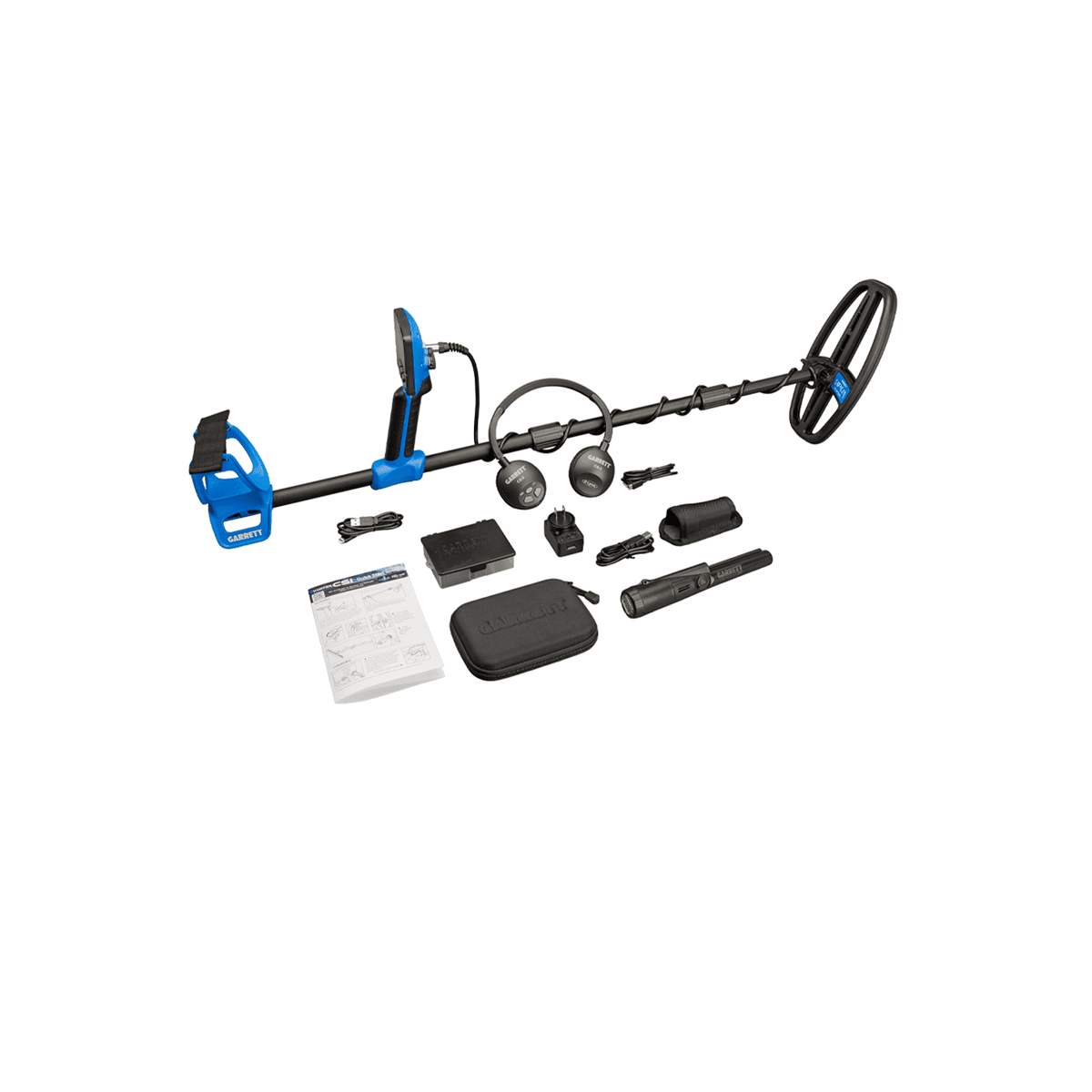
The Vortex CSI Field Kit is our complete solution for crime scene metal detection. Investigators told us that gathering gear before a search wastes valuable time, so we put every essential tool in one case:
- Vortex CSI metal detector with a 6 x 11 inch DD searchcoil and coil cover
- Garrett PRO-Pointer AT Blackline Edition pinpointer
- Garrett CS-3 Z-Lynk wireless headphones for distraction-free detection at busy scenes
- Test target box, charger and cable, zippered carrying case, and Quick Start Guide
With the full kit, a team can grab one case and start searching right away. It is our field-tested approach in its most complete form, ready for any scene.
Trusted in the Field: Garrett CSI Detectors
At Garrett, our approach to crime scene detectors comes down to one idea: when investigators help shape the tools, the tools earn their trust. Every mode, frequency, and feature on our Vortex CSI started with a real problem reported from a real scene.
From filtering out iron trash to searching underwater and working through the night, we built each one to help teams recover evidence faster and with less disturbance. That commitment to listening, testing, and improving is what we bring to every detector that leaves our facility in Texas, and it is why agencies can count on our equipment when the stakes are high.
Is your team prepared for its next investigation? Contact us today to equip your CSI team with field-tested detection equipment built for evidence recovery. Our experts will help you choose the right setup for your terrain, team size, and search needs.