
Picture a crime scene at dusk. A witness says the suspect tossed a handgun while running across a muddy field, and a shell casing may have rolled into tall grass. Officers search shoulder to shoulder but find nothing. The gun could be buried a few inches down, sunk in a nearby pond, or hidden under a pile of brush.
After years of working with search teams, we know that each detector has its own best-use case. Environment, soil type, and target size each call for specific features. The wrong equipment can miss evidence completely or lead to over-digging that damages the scene. With decades in the metal detecting industry, our team at Garrett has the expertise to cover detector technology, discrimination, recovery speed, versatility, and scene preservation.
Key Takeaways
- Crime scenes vary, so the equipment should match the terrain, the clutter and the evidence being sought.
- VLF detectors excel at finding small items like casings and bullets on clean ground, while PI detectors handle mineralized soil, saltwater and underwater searches.
- Target discrimination and notch filtering help teams separate real evidence from metallic trash, reducing unnecessary digs.
- Fast recovery speed lets a detector separate closely spaced targets and prevents junk from masking small evidence in cluttered urban scenes.
- Precise pinpointing keeps holes small, which protects footprints, soil layers and chain of custody for court.
- The Garrett Vortex CSI and PRO-Pointer AT Blackline Edition give agencies industry-leading tools that cover land, water and pinpointing work.
How Metal Detectors Support Forensic Investigations
In a modern search team, the metal detector works like an early warning system that shows investigators where to look before anyone starts digging. Operators sometimes work alongside technicians, photographers, and evidence officers so every signal is checked, recorded, and recovered properly. Common evidence types include:
- Firearms and knives
- Brass shell casings and lead bullets
- Discarded cell phones and electronics
- Keys, jewelry, and other personal items linked to suspects or victims
Visual and manual searches often fall short when these items are buried, hidden, or scattered. Grass, leaves, snow, and loose dirt can cover small objects in minutes, and suspects often push items into soft ground on purpose. A detector fills these gaps by finding metal that the human eye simply cannot see.
Matching Detector Technology to the Search Terrain
The ground itself is one of the biggest factors in any search. Some soil is clean and easy to work, while other soil is full of iron, salt, or minerals that confuse many detectors.
The two main technologies for evidence work are Very Low Frequency (VLF) and Pulse Induction (PI). Each has clear strengths and weaknesses. Knowing the difference helps your team pick the right unit before the search starts.
Very Low Frequency (VLF) Detectors
VLF detectors, a favorite of many field teams, offer the best overall sensitivity for standard land searches. They pick up small items like casings, bullets, and keys well. Most can also tell different metals apart, which helps a lot in busy areas.
Ground canceling features, often called ground balance, tune out false signals from ordinary soil. These detectors work best in fields, yards, parks, and roadside ditches, which are some of the most common dump sites.
Pulse Induction (PI) Detectors
PI detectors, a top choice for tough conditions, send short, strong pulses and mostly ignore interference from mineralized ground. They stay quiet in red clay, volcanic ground, and iron rich earth. They also excel on saltwater beaches, along shorelines, and during underwater recovery.
The trade-off is weaker metal discrimination, so operators often dig more junk targets. PI units are also usually heavier and more expensive than VLF models. For tough ground and water, though, the trade-off is almost always worth it.
Comparing VLF and PI Detectors
Choosing between VLF and PI technology is easier when you see their strengths side by side. Each type shines in different conditions, and neither one is the best choice for every scene. The table below compares how they perform in the areas that matter most for evidence recovery.
| Feature | VLF Detectors | PI Detectors |
| Best terrain | Fields, yards, parks, ditches | Mineralized soil, beaches, underwater |
| Small target sensitivity | Excellent | Good to excellent |
| Metal discrimination | Strong | Limited |
| Performance in salt or iron soil | Fair to poor | Excellent |
| Typical weight and cost | Lighter, lower cost | Heavier, higher cost |
As the comparison shows, VLF units are the stronger pick for clean ground and small targets like casings. PI units take the lead when salt, iron, or saltwater might overwhelm a VLF detector. Many agencies keep both on hand so they are ready for any terrain a case might bring.
Need one detector that can handle fields, mineral heavy soil, and water? The Vortex CSI uses multi-frequency technology and is waterproof to 16 feet, so your team can move from dry land to the shoreline without switching units. Explore the Vortex CSI and see how it fits your agency’s search environments.
Target Discrimination: Separating Evidence From Metallic Trash
Most outdoor scenes are full of nails, bottle caps, foil, and pull tabs. Discrimination helps teams sort real targets from this junk. Used well, it speeds up the search and keeps the team focused. Used poorly, it can cause operators to skip real evidence, so understanding how it works matters.
How Discrimination Logic Works
Detectors classify metals by conductivity and signal response. Iron, brass, lead, and aluminum each give different readings, often shown as target ID numbers or different tones. Investigators can set the unit to reject unwanted signals like iron. Still, a heavily rusted weapon or a gun with mixed metal parts can read oddly. Make a first pass with very low or zero discrimination in high priority zones.
Notch Filtering for Precision Searches
Notch filtering blocks specific target ranges while accepting others. It works best when you know what type of evidence you are hunting, such as spent rounds from a handgun. The smartest approach is to build settings around the case instead of relying on factory defaults. For a shooting scene, a typical setup looks like this:
| Reject (Common Trash) | Accept (Likely Evidence) |
| Iron nails | Brass shell casings |
| Bottle caps | Lead projectiles |
| Aluminum foil | Handgun frames and parts |
With these settings, the detector stays quiet over common junk and sounds off when it passes over likely evidence. Operators should still save each setup and note it in the case file so the search can be explained later in court.
Why Discrimination Saves Time in an Investigation
Every unnecessary dig costs time and disturbs the ground. Fewer digs let teams cover large areas faster, sometimes finishing in hours instead of days. Constant false alarms also wear operators down and dull their focus. Cleaner signals keep them alert, which lowers the risk of overlooking a key item.
Reactivity and Recovery Speed in Cluttered Scenes
Some scenes are not just messy. They are packed with metal, and in these spots detector speed matters as much as depth. A slow detector blurs signals together and hides small items near junk. Agencies often overlook this feature when buying equipment.
What Recovery Speed Means
Recovery speed is how quickly the detector resets between signals. A fast reset means the unit is ready for the next target almost right away. This matters when targets sit close together. A slow unit may report a casing and a bottle cap as one signal, while a fast unit reports both and gives the operator a chance to recover the evidence.
The Masking Problem in Urban Crime Scenes
Alleys, vacant lots, and construction sites are trashy environments that can hold thousands of metal scraps. Unfortunately, they are also common places for crimes and dumped evidence. Masking happens when a large or nearby junk signal hides a small item that is of interest to thes search. A rusty pipe can easily overpower the faint signal from a casing, leaving key proof in the ground.
Benefits of a Highly Reactive Detector
A reactive detector separates closely spaced objects and pinpoints small items, like one casing among nails and broken glass. That means smaller, more targeted holes. It also improves accuracy in high traffic public areas. Parks, sidewalks, and parking lots collect coins and trash daily, and a reactive unit helps operators work through it with confidence.
Environmental Versatility and Waterproofing
Evidence does not always land on dry, open ground. Suspects often toss items into water, wetlands, or hidden spots inside buildings. A detector built for only one setting leaves gaps in your search plan. Your team needs gear that can go underwater, fit tight spaces, and survive bad weather.
Searching Water Bodies and Wetlands
Submersible VLF detectors handle shallow freshwater searches, such as wading along a creek bank. Waterproof PI systems are often designed for deeper submergence and for saltwater recoveries, often with dive teams. Ponds, rivers, lakes, drainage canals, and swamps show up again and again in case reports. Suspects think water hides evidence forever, but the right detector proves otherwise.
Searching Structures and Unusual Hiding Spots
Weapons and phones may hide in wall cavities, under floorboards, or inside furniture. Compact detectors and pinpointers scan these spots without tearing them apart. Wood piles, brush heaps, and debris stacks are also favorites. Suspects choose them because they are quick, close by, and look unlikely to be checked.
Durability Features to Look For
Look for strong weather resistance so rain, mud, and dust do not stop a search. Rugged housings protect the unit from bumps and drops on rocky or wooded terrain. Ergonomics matter more than many buyers expect. Adjustable shafts, padded arm cuffs, and good balance keep operators sharp during long search shifts.
Preserving the Integrity of the Crime Scene
A properly tuned detector pinpoints items before digging begins, so teams open small holes instead of wide pits. This protects footprints, biological material, and natural soil layers that may show when an item was buried.
Marking, measuring, and photographing exact recovery spots also supports chain of custody and admissibility. Over-digging or demolishing structures can destroy evidence and give the defense room to challenge the case. In our experience, careful detector work protects both the case and the agency.
Want smaller holes and cleaner recoveries? Our PRO-Pointer AT Blackline Edition narrows each target down with a pinpointing tip, 360 degree detection, and a built-in depth ruler for documentation. Add one to your kit and protect the evidence around every find.
How to Choose the Right Metal Detector for Your Agency
Evidence work demands more than a hobby detector, so equipment should match real case needs. Start by reviewing where past evidence was found and what ground was involved. Then gather detectives, crime scene staff, and dive teams to answer these questions together:
- What terrain does our jurisdiction search most often?
- Do we regularly work near water or in mineralized soil?
- How often do we search urban, debris heavy scenes?
- What target sizes are we usually trying to find?
A coastal agency with frequent beach searches needs different gear than a rural agency in farm country. Honest answers now prevent costly mistakes later.
Garrett Equipment for CSI Teams And Evidence Recovery
The right equipment turns a hard search into a fast, clean recovery. Garrett builds tools made for crime scene work, from a multi-terrain detector to a rugged pinpointer. Here are three options that match the terrain, clutter, and evidence challenges.
Garrett Vortex CSI
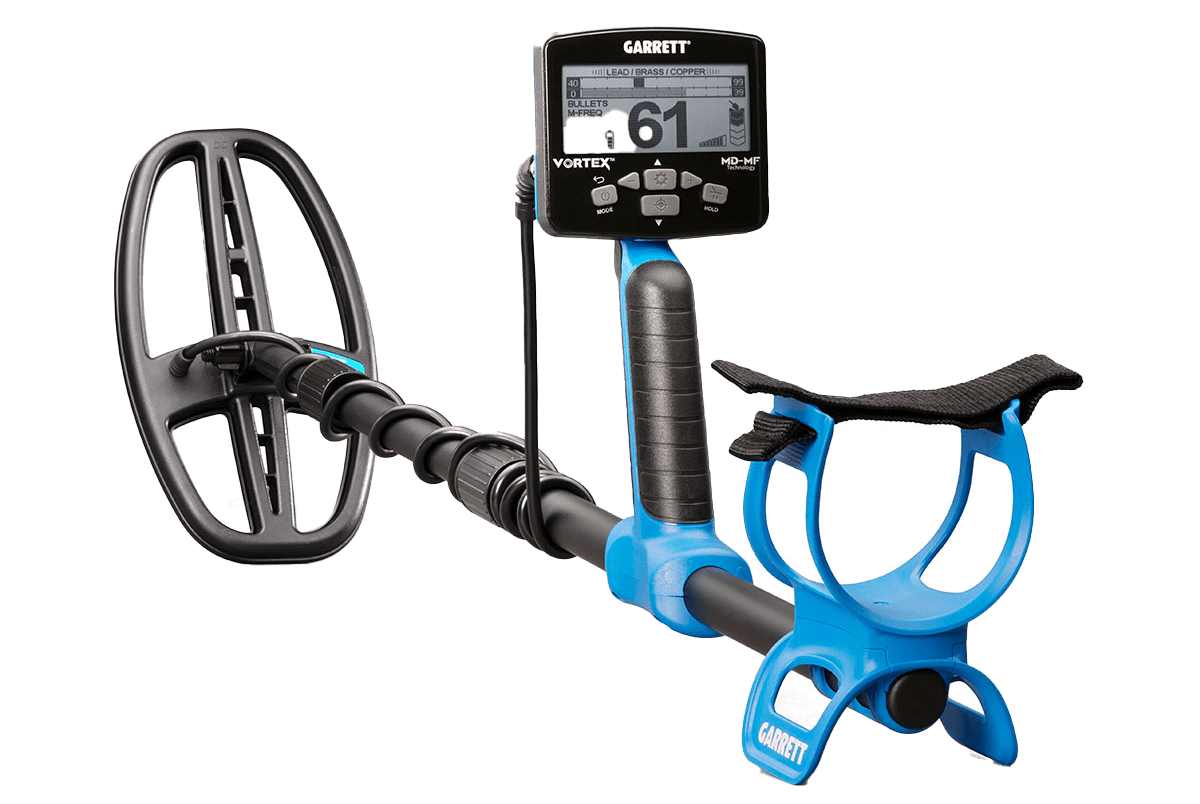
The Garrett Vortex CSI is built to recover metallic evidence across all terrains, including shallow water. Its special search modes are designed to cut the time teams spend hunting for bullets and casings.
- Bullets Mode finds lead bullets and brass or copper casings while silencing common iron trash
- Steel Casings Mode helps identify tricky steel casings that also contain non-ferrous plating
- Multi-frequency technology with a two-scale Target ID shows both ferrous and non-ferrous readings
- Fully waterproof to 16 feet, with Beach Mode and multi-frequency salt operation for wet sand and surf
This detector handles the clean fields, mineral heavy soil, and water sites that usually require more than one unit. It gives teams the discrimination and versatility they need to find small evidence without digging up the whole scene.
Garrett PRO-Pointer AT Blackline Edition
The PRO-Pointer AT Blackline Edition is a handheld pinpointer updated to military standards for crime scene and countermine work. It helps operators zero in on a target after the main detector finds the general spot.
- Waterproof to 20 feet with an IP68 rating and MIL-STD-810 durability
- 360 degree side-scan detection with a pinpointing tip and scraping blade for soil and debris
- Fast Retune narrows the detection field and tunes out mineralized ground or wet sand
- LED flashlight, built-in depth ruler, and vibrate-only stealth mode for low light or quiet searches
A pinpointer like this keeps holes small, which protects footprints, soil layers, and other trace evidence. The built-in ruler also makes it easier to record recovery depth for the case file.
Vortex CSI Field Kit
The Vortex CSI Field Kit pairs the Vortex CSI detector with the accessories a search team needs in the field. It is a complete, ready-to-deploy package for agencies building a crime scene toolkit.
- Includes the Vortex CSI detector and the PRO-Pointer AT Blackline Edition pinpointer
- CS-3 Z-Lynk wireless headphones with low audio delay and padded cups that block outside noise
- Test target box for regular calibration and field testing with known targets
- Zippered carry case, charger, and cable to keep everything protected and ready to go
This kit covers the search, the pinpointing, and the testing steps in one package. It gives agencies a simple way to build the multi-tool setup that keeps evidence recovery fast, accurate, and scene-safe.
Choosing The Right Metal Detector For CSI Teams & Evidence Recovery
The right detector depends on the terrain, the clutter, and the evidence being sought. VLF units shine on open land, PI units handle tough soil, and fast, reactive units cut through urban clutter. When equipment matches the scene, teams find more evidence in less time. That is why the right metal detector matters for evidence recovery.
The goal is always to find hidden evidence while keeping the scene intact for court. Take a close look at your current equipment and compare it against the places your agency searches most. If you find gaps, contact our team at Garrett to find the right detector, pinpointer, and accessories to outfit your search team before the next big case.