
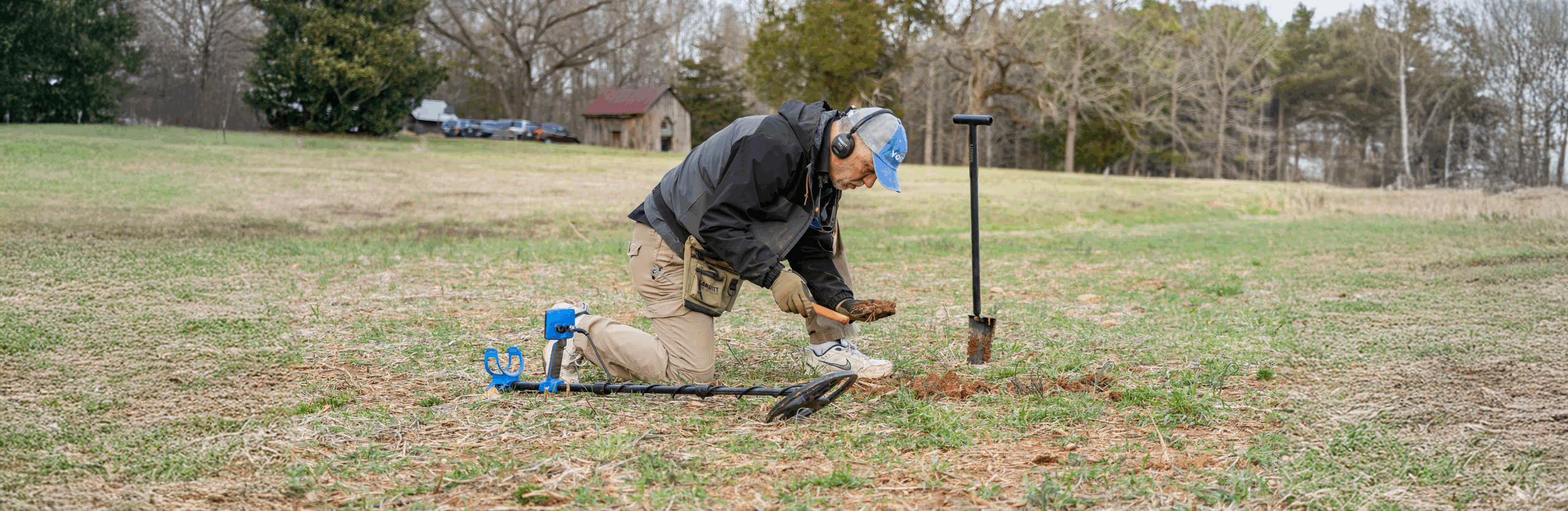
Metal detectors can absolutely find jewelry, and this is one of the most common reasons people get into the hobby in the first place. Gold, silver, platinum, and other conductive metals all trigger a response in a standard detector because they interact with the electromagnetic field the machine sends into the ground. To understand what metal detectors detect more broadly, it helps to know that jewelry behaves like any other conductive target once it is buried.
That said, not every piece of jewelry gets found the same way, and success is never guaranteed just because someone owns a detector. How well a machine spots a ring or necklace depends on the type of metal involved, the quality of the detector being used, and how the settings are dialed in for the specific search area. Our team at Garrett will walk you through exactly how to use your metal detector to find jewelry.
Key Takeaways
- Metal detectors find jewelry by sensing conductivity, so silver and high-purity gold produce strong signals while low-karat gold and thin items are harder to detect.
- Discrimination settings filter out trash metal but can accidentally skip real gold jewelry that shares a similar conductivity range.
- Detector quality matters, since entry-level machines offer basic presets while mid-range and high-end models provide finer control for tricky targets.
- Detection depth depends on the size and metal mass of the item, with soil mineralization able to cut range nearly in half.
- Beaches, parks, sports fields, and even backyards near hoses or garden beds are especially productive spots for finding lost jewelry.
- Garrett offers dedicated detectors like the Vortex VX9 and Axiom Lite, each suited to different jewelry hunting conditions from mineralized soil to saltwater beaches.
How Metal Detectors Actually Detect Jewelry
The Role of Conductivity
Metal detectors work by sending out an electromagnetic field from the search coil, the round piece at the bottom of the machine. When that field passes over a metal object in the ground, it creates a small electrical current inside the object, and the detector picks up the disturbance this causes in the field.
The strength of that signal depends heavily on how conductive the metal is. This is why detecting silver jewelry and high purity gold is considered easy, since both conduct electricity extremely well and produce a strong, clean signal even at moderate depth. Understanding how detectors find gold specifically helps explain why lower purity alloys, thin chains, and tiny stud earrings are trickier, since they have less metal mass to interact with the field.
Detector Settings That Matter
Most treasure hunting detectors include coin and jewelry modes designed to filter out iron and junk metal like bottle caps and rusty nails. These modes rely on metal detector discrimination settings, which tell the detector to ignore certain conductivity ranges tied to trash. The problem is that some gold jewelry, especially lower karat pieces, sits in a similar conductivity range to common trash metals, so aggressive discrimination can cause a detector to skip right over a real ring.
Entry-level detectors often come with basic preset modes that lack fine-tuned control. Mid-range detectors offer adjustable settings for thin gold and silver items, and high-end models rely on multi-frequency detection technology that separates close-range targets more accurately. The table below breaks down how these categories compare for jewelry hunting.
| Detector Type | Typical Discrimination Control | Best For |
| Entry-level | Preset modes, limited adjustment | Coins, general trash-free areas |
| Mid-range | Adjustable discrimination and sensitivity | Fine jewelry, mixed-trash areas |
| High-end | Full manual control plus ground balance | Difficult soil, deep or small targets |
| Waterproof/beach models | Salt water mode plus adjustable discrimination | Wet sand, shallow water, tide zones |
Detection Depth and Size Limitations
Small and thin jewelry generally shows up within a few inches to just under a foot of depth, depending on the detector and how the ground is set up. Anyone curious about how deep metal detectors reach will find that bulkier items like thick bracelets or heavy pendants get detected deeper, since they have more metal mass to interact with the field.
Rings and thin chains are harder to find because there is less metal packed into a small space, limiting how far their signal travels before it becomes too weak to register. Ground conditions matter too, and soil mineralization effects can reduce effective depth, sometimes cutting detection distance nearly in half compared to clean, dry soil.
Types of Jewelry Metal Detectors Can Find
Rings and wedding bands are commonly found because they are solid, dense, and often lost in high-traffic spots like beaches and sports fields. Necklaces and bracelets also detect well due to their metal content, though thin chains can be trickier than thick designs. Stud earrings limit detection depth, while hoops carry more metal and detect more reliably.
- Overall metal mass, since larger and heavier pieces send a stronger signal
- Metal purity, since higher purity gold and silver conduct better than mixed alloys
- Shape and design, since hoops and thick bands outperform thin studs and fine chains
- Burial depth and surrounding soil, since deep or heavily mineralized ground weakens even strong signals
These factors explain why two rings made of the same metal can behave very differently under a detector. A thick, high purity band buried a few inches down in dry soil will almost always produce a clear signal, while a thin item buried deeper in wet ground may barely register. Learning some basic techniques for finding a ring can help close that gap.
| Jewelry Type | Common Metal | Detectability |
| Rings and wedding bands | Gold, platinum | High, especially with proper settings |
| Necklaces and bracelets | Silver, gold | High, strong conductivity |
| Platinum jewelry | Platinum | Moderate to high, denser metal |
| Stud earrings | Gold, silver | Moderate, small size limits depth |
| Hoop earrings | Gold, silver | High, more metal mass than studs |
| Costume jewelry | Mixed alloys | Variable, depends on metal content |
Best Places to Search for Lost Jewelry
Beaches
Beaches are one of the highest-yield spots for jewelry hunting, and dry sand, wet sand, and shallow water each behave differently for detection. Dry sand is easiest to search due to low mineral content, while wet sand near the waterline can reduce depth. Hunting the tide line also calls for a detector rated for detecting underwater.
Beaches produce so many finds because of everyday factors that cause jewelry to slip off unnoticed. Sunscreen makes fingers slippery, cool water shrinks fingers and loosens rings, and activities like swimming or playing shakes earrings loose. These beach metal detecting tips cover the environment in more depth.
Parks and Sports Fields
High-traffic areas like bleachers, playgrounds, and sports fields are worth checking since they see constant activity from large numbers of people. Quick movements, tight gripping, and sudden stops all create chances for jewelry to fall off unnoticed.
Bleachers are underrated, since loose jewelry can slip through the seating gaps and land underneath. Sports fields see similar losses during running, throwing, or diving for a ball. These spots belong on any list of good metal detecting locations.
Backyards and Home Areas
Home properties are often overlooked, but lawn areas, garden beds, and spots near hoses or sprinklers are common places for jewelry to get lost. Water makes rings slip off during yard work or watering, and garden beds can hide small items in loose soil for years. These zones rarely get searched since homeowners assume nothing valuable could be hiding somewhere so familiar.
- Along fence lines and walkways where rings are removed before yard work
- Near outdoor faucets, hoses, and sprinkler heads
- Under decks, porches, and other shaded areas that rarely get raked or mowed
- Around pool edges and patios where jewelry is taken off before swimming
Most homeowners are surprised at how much lost jewelry turns up in these exact spots once they run a detector over them. The combination of hand washing, yard work, and swimming near the house makes these areas just as productive as parks or beaches. Taking even twenty minutes to sweep these zones can turn up jewelry that has been missing for years.
Tips for Maximizing Jewelry Finds
Getting the most out of a detector comes down to technique as much as equipment. These metal detecting tips paired with jewelry-specific adjustments can noticeably improve results in already-searched areas.
- Use slow, overlapping sweeps to make sure the coil passes over every inch of ground without leaving gaps
- Adjust sensitivity higher for small targets like studs and thin bands, since low sensitivity can cause weak signals to be missed
- Set ground balance properly for mineralized soil or wet sand conditions to avoid false signals and lost depth
- Dig all uncertain or iffy signals when jewelry hunting instead of relying only on target ID numbers, since discrimination readings are not always accurate
These habits matter, since even an expensive detector underperforms in the hands of someone rushing through a search. Getting comfortable with ground balance settings pays off in soil that would otherwise mask a good target. Hunters who treat these steps as routine find far more jewelry than those relying on default settings alone.
Which Detector Fits Your Jewelry Hunt
Picking the right machine matters just as much as knowing where to search or how to set discrimination. The two detectors below from our team at Garrett take different approaches, one built for all-around versatility and one built for specialized prospecting, and both handle jewelry detection well when set up correctly.
Garrett Vortex VX9
The Vortex VX9 is built for hunters who want maximum flexibility across different jewelry types and terrain, from dry parkland to shallow surf. Its Multi-Dimensional Multi-Frequency system gives it the range to handle everything from delicate stud earrings to bulky bracelets in a single outing.
- Multi-Dimensional Multi-Frequency technology with 7 frequency options for tuning to specific metal types
- 7 search modes including a dedicated Beach setting for wet sand and mineralized conditions
- 3-tier target ID scale that helps separate real jewelry from iron trash more precisely
- Fully waterproof up to 16 feet, making it a strong option for shallow water and tide line hunting
This kind of frequency flexibility is exactly what matters when chasing thin gold chains one day and heavier silver bracelets the next. The Beach mode and waterproof rating in particular make it a natural fit for the high-yield coastal spots covered earlier in this guide.
Garrett Axiom Lite
The Axiom Lite takes a more specialized approach, using pulse induction technology to dig deeper and cut through the mineralized ground that often causes weaker jewelry signals to disappear. At 4.2 pounds, it stays light enough for long search sessions in tough soil conditions.
- Pulse induction technology designed to punch through heavy mineralization and saltwater sand
- Terra-Scan dual-channel ground balance for stable performance in difficult ground
- Four detection modes, including a Salt setting for beach and surf conditions
- Iron Check feature to help filter out trash without losing weak jewelry signals
For anyone hunting mineral-heavy soil or salt-soaked beach sand, this is the kind of ground balance control that keeps low-purity gold and thin silver from getting lost in the noise. It trades some general-purpose versatility for serious depth and stability where standard detectors start to struggle.
Understanding How Metal Detectors Detect Jewelry
Metal detectors reliably find jewelry, from gold rings to silver bracelets to platinum pieces, but success depends heavily on settings, location, and technique working together. Understanding how conductivity, depth, and ground conditions affect detection can turn a frustrating hunt into a genuinely productive one.
Anyone serious about finding lost jewelry should choose a detector with adjustable discrimination and sensitivity, then learn the settings that work best for thin and small targets in their search areas. Brushing up on how to use a metal detector as a whole is a great next step for turning these tips into consistent finds.
Ready to find your next piece of jewelry? Check out our full selection of sport metal detectors and find the right machine for your next hunt. From beginner-friendly models to advanced detectors, there is an option built for whatever ground you plan to search next.