
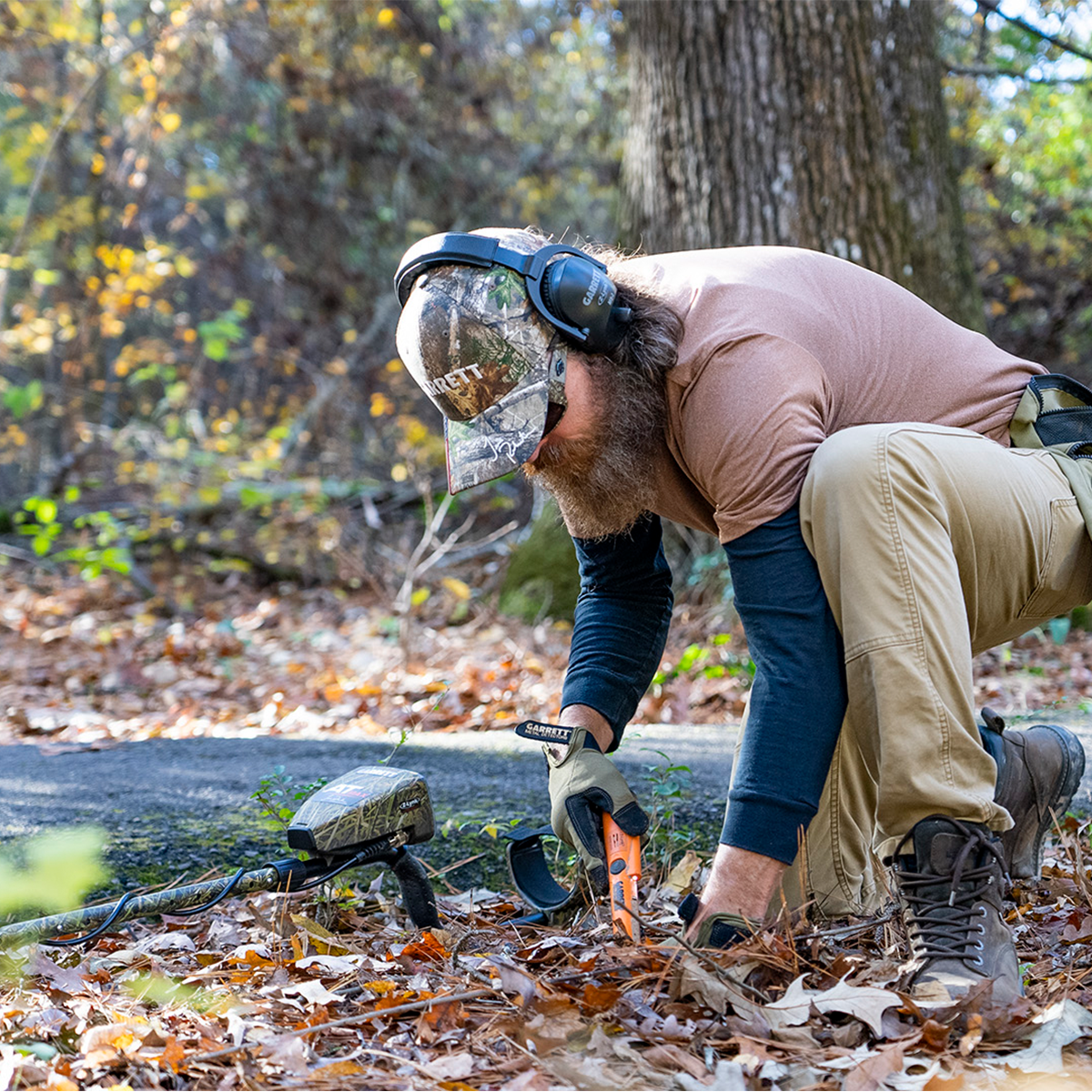
Crime scene work leaves very little room for error. One careless scrape with a trowel can wipe out the tiny detail that ties a suspect to a scene. That is why the tools in an evidence kit matter just as much as the training of the people using them. Here at Garrett, we have spent decades building detectors for law enforcement and forensic investigation teams, and our Pro-Pointer was designed for this kind of careful, close-range work.
We believe pinpointer metal detectors belong in every evidence kit. They speed up evidence recovery, protect delicate forensics from damage, and find tiny or buried metal evidence the naked eye misses. Our team at Garrett will explain the tool gap pinpointers fill, five core benefits, a field workflow, buying criteria, and best practices for using one at a scene.
Key Takeaways
- Pinpointers fill the precision gap that full size detectors leave once investigators move to close range work.
- They locate metal evidence within a fraction of an inch, so teams dig less and disturb less of the scene.
- Gentle, targeted recovery protects rifling marks, fingerprints, and DNA from damage by shovels and trowels.
- Pinpointers quickly flag tiny items like bullet fragments, dental fillings, and broken knife tips that the eye can easily miss.
- A documented two tool workflow pairs wide area coverage with precise recovery and holds up well in court.
- Garrett’s PRO-Pointer AT Blackline Edition offers waterproofing, Stealth Mode, and a built in ruler for CSI teams.
The Precision Gap in Forensic Metal Detection
Most agencies already carry a full-size metal detector for outdoor searches. These detectors work well, but they were never designed for the careful work that happens once a target is found. Think of it like a map and a magnifying glass. The map gets you to the right street, and the magnifying glass shows the details once you arrive. Without both, investigators end up guessing, and guessing means extra digging.
Where Full-Size Detectors Shine
Full-size detectors are built to scan wide, open spaces like fields, parking lots, and roadsides. Their large search coils cover a lot of ground with each swing. A trained operator can walk a grid pattern and mark hits across a large area in a short amount of time, even when the search zone stretches for hundreds of yards.
This makes them the right first tool for setting up a general search zone. When a weapon may have been tossed from a moving car, a full-size detector can sweep the shoulder of the road quickly. It tells the team where to focus their time and energy, and it helps commanders decide how many people and how many hours the search will need.
Where They Fall Short at Close Range
Once investigators are on their hands and knees, a large coil becomes hard to use. It only shows that metal is somewhere under a spot several inches wide, and it will not fit in tight corners or debris piles without disturbing the soil. This is where the pinpointer comes in. It does not replace a full-size detector. It is the close-range partner that takes over once the big machine has done its job.
| Feature | Full-Size Detector | Handheld Pinpointer |
| Best use | Wide area sweeps | Close-range recovery |
| Target accuracy | General area of a few inches | Within a fraction of an inch |
| Works in tight spaces | Poorly | Very well |
| Scanning excavated soil | Awkward and slow | Fast and simple |
| Low-light use | Depends on model | LED, vibration, and audio alerts |
Key Reasons Pinpointers Belong in Evidence Kits
Pinpointers are small, but their value at a scene is large. They help teams work faster while touching less of the scene, a rare mix in forensic tools. The five reasons below come from real field performance. Each one solves a problem technicians face, from damaged ballistics to lost fragments to late-night searches.
1. Micro-Location Accuracy
A standard detector narrows a target down to a general area a few inches across. A handheld pinpointer narrows it down to a much tighter spot, often within millimeters at the tip. Many models, including our Pro-Pointer units, also get louder or vibrate faster as the tip moves closer to the object, so the technician can feel the target getting nearer with each pass.
This means investigators can find exactly where an item is buried without digging a wide hole. Less digging means less of the scene is changed. It also means the original position, angle, and target depth are easier to record accurately, which can matter a great deal when an expert later explains how that item ended up where it did.
2. Preservation of Evidence
Shovels and metal trowels can scratch lead bullets and damage weapons. A single scratch can ruin the rifling marks that a firearms examiner needs to match a bullet to a gun. Rough handling can also rub off DNA or fingerprints left on a knife handle or brass shell casing, and once that trace evidence is gone, there is no way to get it back.
A pinpointer shows the technician exactly where to gently brush the dirt away. Instead of probing blindly, the team can work straight toward the signal using soft brushes and plastic tools. Physical contact with the item stays as low as possible until it is ready to be photographed, measured, and collected.
3. Locating Fragmented Evidence
Some of the most important evidence at a scene is also the smallest. Tiny metal pieces are common, and they are easy to miss even for experienced technicians. Examples include the following.
- Bullet shrapnel and jacket fragments
- Dental fillings and crowns
- Broken knife tips
- Small jewelry pieces such as clasps or earring backs
These items are nearly impossible to see in mud, thick grass, or blood. Whether a piece is ferrous or non-ferrous, a pinpointer flags it right away, even when it is covered or blends into the ground around it. In cases involving human remains, finding a single filling or ring or necklace can help with identification, which makes this ability far more than a convenience.
4. Efficiency in the Field
Hand-sifting buckets of dirt or mud takes a long time. It also wears out technicians, and tired people make mistakes. On a large outdoor scene, sifting alone can stretch recovery into the next day, which leaves evidence exposed to rain, animals, and curious onlookers for even longer.
Passing a pinpointer over excavated soil answers a simple question fast. Is the target in the pile, or is it still in the hole? Knowing the answer right away can shave hours off total processing time, keep the team focused, and free up people to work on other parts of the scene.
5. Low-Visibility Operations
Many pinpointers come with built-in LED lights, vibrating alerts, and audio tones. Vibration is especially helpful because it works even when the scene is loud with traffic or generators, or when a technician needs to stay quiet. The light helps show the exact spot being searched without setting up extra equipment.
These features let teams search well at night, at the bottom of deep trenches, and inside wall cavities where visibility is close to zero. They also help in crawl spaces, drains, and vehicle interiors where a technician cannot get a clear look. When eyes cannot do the job, the pinpointer still can.
Putting It Into Practice: A Two-Tool Search Workflow
The best results come from using both detectors together in a set order. A clear process keeps the team on track and makes every step easy to explain later. Here is the approach we recommend based on years of supporting agencies in the field.
Following the same steps at every scene also helps new team members learn faster. It turns good habits into standard practice, so the quality of the recovery does not depend on who happens to be on shift that day.
Step-by-Step Approach
- Sweep the broader area with a full-size detector to identify hits.
- Flag and photograph each hit location before any disturbance.
- Use the pinpointer to define the exact position and depth direction.
- Excavate with soft tools, such as brushes and plastic probes, toward the signal.
- Scan removed spoil before setting it aside or discarding it.
- Document the recovery position, then package the item under chain-of-custody procedures.
Each step builds on the one before it. Skipping the photo step or the spoil scan is where most avoidable mistakes happen, so treat them as required, not optional. Knowing how to read detector signals at each stage also helps, because a missed photo cannot be retaken once the ground is disturbed, and a missed fragment in a spoil pile may never be found again.
Why the Pairing Matters
Each tool covers the other’s blind spot. The full-size detector provides coverage, and the pinpointer provides precision. Together, they leave very little room for missed evidence, and they let the team move from a wide search to a careful recovery without changing their approach halfway through.
This pairing also creates a repeatable process that holds up in court. When a defense attorney asks how an item was found, the technician can walk through clear, documented steps. That kind of answer builds trust with a jury and makes it much harder to suggest that evidence was mishandled.
What to Look for When Choosing a Forensic Pinpointer
Not every pinpointer is built for crime scene work. Hobby models may be fine for a weekend at the beach, but forensic-grade equipment has to meet a higher standard. The table below covers the features we consider most important when evidence and court cases are on the line.
| Feature | Why It Matters at a Scene |
| Waterproof rating | Handles submerged, muddy, or rain-soaked scenes |
| Adjustable sensitivity | Filters out mineralized soil and cuts false alerts |
| Rugged housing | Survives drops, crushing, and harsh environments |
| Lost-unit alarm | Helps recover the tool if it is set down in debris |
| Easy-to-clean surface | Supports decontamination between scenes |
When comparing models, look for a fully waterproof unit rather than one that is only splash resistant, since searches near water in ponds, ditches, and storm drains are common. A smooth surface with few seams is also easier to wipe down, which matters when you move from one scene to the next. Finally, choose a model that is rechargeable, like our PRO-Pointer AT Blackline Edition.
Best Practices for Using Pinpointers at a Scene
Test the unit on a known metal sample before each deployment, such as a coin or a spent casing kept in the kit for this purpose. This quick check confirms the device is working and reminds the operator how strong a real signal feels. Wear gloves and avoid touching evidence with the probe tip, and decontaminate the device between scenes so you do not carry trace material from one case to another.
Even though our PRO-Pointer AT Blackline Edition is rechargeable, keep spare batteries and other essential detector accessories in the kit at all times, because a dead unit halfway through a recovery slows everything down. Train technicians on how to retune the pinpointer in high-mineral soil or areas cluttered with nails, wire, and other junk metal. A quick retune can be the difference between a false alarm and a real find, and regular practice keeps those skills sharp when a real call comes in.
The Garrett PRO-Pointer AT Blackline Edition for CSI Teams
Our PRO-Pointer AT Blackline Edition updates the world’s best-selling pinpointer to military standards for CSI work. It detects both ferrous and non-ferrous metals and was designed to find evidence fast while keeping contact with it to a minimum.
- Fully waterproof to 20 feet (6 meters) with an IP68 rating for submerged, muddy, or rain-soaked scenes
- Pinpointing tip and 360° side-scan detection with proportional audio and vibration alerts, plus a vibrate-only Stealth Mode
- Built-in LED flashlight and a molded inch and centimeter ruler for low-light searches and depth documentation
- Fast Retune, three sensitivity levels, and a lost-unit alarm, powered by a rechargeable USB-C 9V battery that runs up to 30 hours
Together, these features let your team zero in on a target, dig only where it counts, and record its exact position. That means less digging, less disturbance, and stronger evidence for every case.
Stronger Cases Start With Smarter Recovery
Every piece of evidence tells part of a story, and that story is only as strong as the care taken to recover it. Less digging means less disturbance, and less disturbance means stronger evidence in the lab and in the courtroom. A pinpointer gives your team the precision to find small metal items quickly, the control to protect fragile forensic details, and the confidence to explain every step under oath.
It is a small, inexpensive tool with an outsized impact on case integrity. When you weigh its low cost against the risk of a damaged bullet or a missed fragment, the choice becomes clear. Take time this week to audit your evidence kit and close any gaps you find.
Is your team ready for its next scene? Contact Garrett today to get your CSI team equipped with professional metal detectors, pinpointers, and the evidence recovery gear they need to work faster and protect every detail.