
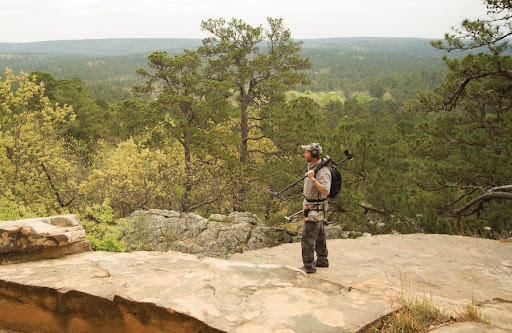
Choosing the right metal detector for wildlife crime investigations can decide whether a poaching case holds up in court. A single bullet fragment, a rusted snare, or a buried rifle can link a suspect to a protected animal that was killed illegally. Investigators usually search for three kinds of metal evidence: ballistic evidence such as bullets, fragments, and casings, snares and traps, and cached weapons hidden for later use.
At Garrett, our team has worked alongside rangers, game wardens, and forensic specialists for decades, and we have seen strong cases built on metal evidence found in minutes. We will explain how to choose a detector by matching your forensic targets to the right technical specs and the environmental conditions you face in the field.
Key Takeaways
- Wildlife crime cases often depend on recovering metal evidence such as bullets, casings, snares, and hidden weapons.
- Hobbyist detectors often fall short in rugged, mineralized, trash-filled terrain where forensic accuracy matters.
- VLF detectors excel at discrimination, PI detectors reach the deepest in mineralized soils, and SMF detectors balance both across changing soils.
- Key features include tracking ground balance, iron discrimination, full waterproofing, and high-resolution Target ID.
- Pairing a full-sized detector with a handheld pinpointer covers both wide-area searches and close-quarter recovery.
- Garrett’s Vortex CSI and PRO-Pointer AT Blackline Edition give wildlife teams both tiers of this field setup.
Why Standard Hobbyist Detectors Fall Short in Poaching Investigations
Wildlife crime scenes are nothing like a city park or a sandy beach. They are outdoor and unmanaged, often deep in rugged terrain far from roads. Investigators commonly run into several challenges at these sites:
- Rocks, roots, and thick brush that make sweeping a coil difficult
- Steep slopes and uneven ground that wear out operators
- Old fence wire, nails, and hunting trash scattered across the area
- Mineralized soil, mud, and standing water that confuse basic detectors
Most hobbyist detectors are built for weekend fun, not for evidence that must stand up in court. Forensic work demands depth, accuracy, and rugged gear that keeps working through heat, rain, and long days. A missed target at a poaching scene can mean a lost case, so the gap between recreational and forensic-grade equipment matters.
Core Detector Technologies for Wildlife Forensics
The technology inside a detector controls how deep it can see and how well it handles mineralized ground. Mineralized soil contains iron particles and salts that confuse many machines, create false signals, and hide real targets. Picking the wrong technology can leave key evidence buried just out of reach.
There are three main technologies to understand before you buy. The table below gives a quick overview, and the sections that follow explain the strengths and limits of each one.
| Technology | Depth | Discrimination | Mineralized Ground | Best Use |
| VLF | Moderate | Strong | Weak without good ground balance | Small ballistic evidence among trash |
| PI | Deepest | Little to none | Ignores it | Deep traps and large caches |
| SMF | Deep | Strong | Consistent | Complex, mixed outdoor sites |
Very Low Frequency (VLF)
VLF detectors offer strong target discrimination and high sensitivity to small targets. They can separate copper or lead ballistic evidence from iron trash like fence wire and nails. That makes them useful when a bullet fragment lies buried near an old fence line or a hunting camp littered with scrap.
VLF machines struggle in highly mineralized soil and in wet saltwater areas, where the ground itself can produce a signal. In those places, their performance depends on strong ground balancing. We recommend VLF for sites where picking small ballistic evidence out of trash is the top priority and the soil is fairly mild.
Pulse Induction (PI)
PI detectors offer the deepest penetration of the three where higher concentrations of ground mineralization exists. They are best at ignoring such challenging soils, so rocky, salty, or iron-rich soil does not slow them down. This makes PI ideal for finding deeply buried traps or large weapon caches that a poacher may have hidden well below the surface.
The tradeoff is that PI offers little to no target discrimination. In a forest, it will alert on every nail and scrap of wire, and each signal must be checked by hand. That slows crime scene work considerably. PI is best for deep searches where depth matters far more than telling metals apart.
Simultaneous Multi-Frequency (SMF)
SMF detectors transmit multiple frequencies at once instead of relying on a single one. This lets them combine deep penetration with strong discrimination, and they perform consistently across many soil types. For complex outdoor sites where conditions change every few hundred yards, SMF is the most versatile all-rounder.
A good example is our Vortex CSI detector at Garrett. It uses our MD-MF multifrequency technology to deliver accurate detection as ground conditions change. Our team designed this kind of machine to handle the shift from a dry ridge to a wet creek bed without constant adjustments, so investigators can stay focused on the search.
Essential Metal Detector Features for Field Rangers and Forensic Teams
Technology is only part of the picture. The features on a detector decide how well it performs during a long day of evidence recovery. Based on what we hear from teams in the field, these four features matter most:
- Advanced ground balance
- Audio and visual discrimination
- Waterproof rating (IP68)
- Target ID and Target Legend
Each feature solves a real problem that rangers face at poaching scenes. Missing even one can cost you depth, time, or critical evidence, so treat this as a checklist when comparing models.
Advanced Ground Balance
Investigators may face anything from volcanic soils to muddy riverbanks in a single week. Each type of ground affects a detector differently, and a setting that works well in one valley may not work at all as you sweep your detector up a rocky incline. Look for automatic or tracking ground balance that keeps adjusting to the soil as you move.
This feature prevents loss of detection depth, so buried evidence stays in range. It also reduces false signals caused by mineralized dirt. Fewer false alarms save time and keep the team focused on real targets instead of chasing phantom signals.
Audio and Visual Discrimination
Forensic teams often need to focus on specific metals, like lead bullets and brass casings. Iron junk can hide these targets or drown out their signals completely. Features like Iron Audio and adjustable iron filters help solve this problem.
Iron Audio lets you hear discriminated iron as a separate low tone instead of silencing it. Adjustable iron filters let you tune how much iron the detector rejects. Together, they unmask non-ferrous targets hidden near ferrous junk, which is common at old homesteads and fence lines where poaching often happens.
Waterproof Rating (IP68)
Submersion capability is mandatory for this work. Poachers often toss weapons or evidence into riverbeds, swamps, or shorelines, hoping water will hide it for good. Look for a fully submersible control box and coil, typically rated to 10 to 16 feet.
For handheld pinpointers, look for an IP68 rating, which means the tool is dust-tight and built for continuous submersion. Gear rated to these standards lets teams search shallow water and wet ground without worrying about damage to their equipment.
Target ID and Target Legend
High-resolution numerical IDs on a 0 to 99 scale help you identify the exact metal type before you dig. A Target Legend shows where common metals, such as lead, brass, and iron, fall on that scale. This gives investigators a clear idea of what lies underground.
Fewer guesses mean fewer unnecessary holes. That matters for evidence preservation, since every extra excavation can disturb a crime scene or damage nearby evidence. Clean, focused digging keeps the chain of evidence strong and supports testimony in court.
Specialized Field Configurations: Building a Multi-Tiered Equipment Strategy
One machine rarely covers every investigative task. A detector with a large searchcoil that sweeps a hillside well is often using too large a coil to effectively probe a carcass or a bullet hole in a tree. Teams that rely on a single tool must be properly equipped with accessory coils as their situation changes.
We recommend a two-tier approach. Combining your ground-search metal detector with a quality pinpointer is a highly recommended extra accessory for locating finer evidentiary items. Use your metal detector to locate the potential target, and then home in and recover it quickly with the aid of a hand-held pinpointer.
Ground Search Team Setup
The ground search team’s main goal is finding buried snares, discarded firearms, and bullet casings in thick vegetation. These searches can cover large areas over many hours. The detector must keep up without wearing out the operator.
Key needs include fast recovery speed, multi-frequency versatility, and an adjustable shaft for comfort during long searches. A full-sized SMF detector built for rugged outdoor use fits this role well.
Carcass and Close-Quarter Forensics Setup
This setup focuses on locating lead projectiles inside animal tissue or tree trunks. These targets are tiny and often lodged in soft material. Precision matters far more than coverage here.
Key needs include high sensitivity to tiny targets, micro-spatial precision, and extreme portability. A handheld CSI pinpointer with a waterproof, rugged build is the right form factor for this delicate work.
Comparison Table: Matching Setup to Mission
The table below summarizes how each setup fits its role. Use it as a quick reference when planning gear for your team.
| Investigator Setup | Primary Objective | Key Requirements | Recommended Form Factor or Example |
| Ground search team | Buried snares, firearms, and casings | Recovery speed, multi-frequency, adjustable shaft | Full-sized SMF detector |
| Carcass and close-quarter forensics | Lead projectiles in tissue or trees | Sensitivity, precision, portability | Handheld CSI pinpointer |
Most teams get the best results by carrying both tools. The full-sized detector locates the evidence zone, and the pinpointer recovers each item without disturbing the scene.
How to Make Your Final Selection of Metal Detectors for Poaching Investigations
A clear process keeps your purchase focused on real field needs rather than flashy extras. Follow these steps:
- List the forensic targets your team most often recovers.
- Assess the dominant terrain and soil conditions in your patrol area.
- Choose the core technology that fits those targets and soils.
- Confirm the must-have features are present.
- Pair a full-sized detector with a pinpointer for complete coverage.
Taking time with each step helps you avoid costly gear that sits unused in a truck. It also makes sure every tool earns its place in the field kit and pays off when it counts.
Garrett Metal Detectors for Poaching Investigations
At Garrett, we build detection tools specifically for crime scene and evidence recovery work. Our CSI line gives wildlife teams both tiers of the field setup described above: a full-sized detector for wide-area searches and a pinpointer for close-quarter precision.
Vortex CSI
The Garrett Vortex CSI is our most advanced crime scene metal detector, built to recover metallic evidence across all terrains, including shallow water. It handles the wide-area search role and includes special modes that cut down the time spent searching for evidence:
- Bullets Mode recovers lead bullets and brass or copper casings while silencing common ferrous items
- Steel Casings Mode helps identify ferrous casings and steel casings with non-ferrous plating
- MD-MF multi-axis Target ID uses separate ferrous and non-ferrous scales to reveal complex targets
- Fully waterproof to 16 feet, with Multi-Salt operation for fresh water, saltwater, and wet beaches
Together, these features match the targets, technology, and terrain that define most wildlife crime scenes. That alignment is exactly what helps rangers recover more evidence and build stronger cases.
PRO-Pointer AT Blackline Edition
The Garrett PRO-Pointer AT Blackline Edition is the world’s best-selling pinpointer, updated to military standards for CSI and countermine work. It picks up where the full-sized detector leaves off, with features built for precise recovery in tight spaces and harsh conditions:
- Submersible to 20 feet (6 m) with an IP68 rating and MIL-STD-810 certification
- 360-degree side-scan detection area with a pinpointing tip and patented scraping blade
- Fast Retune and three sensitivity levels to tune out mineralized ground and narrow in on tiny targets
- Integrated LED flashlight, depth ruler, and up to 30 hours of rechargeable battery life
Paired with a full-sized detector, the PRO-Pointer AT Blackline Edition closes the gap between finding an evidence zone and recovering each item. It helps teams protect the scene, preserve evidence, and support the case in court.
Build Stronger Wildlife Cases With the Right Detection Tools
Choosing the right metal detector for wildlife crime investigations comes down to aligning your targets, technology, and environment. A VLF, PI, or SMF machine each has a place, but only the right match for your soil and evidence will deliver consistent results. Pairing a full-sized detector with a precise pinpointer closes the gaps that let evidence slip through.
The right equipment strengthens evidence recovery and helps build cases that lead to prosecutions. Take a close look at your team’s current gear and compare it against the criteria in this guide.
If you are unsure where your kit falls short, contact our team at Garrett. We will help you match your most common targets and toughest terrain to the right technology and features, so your team can recover more evidence and protect more wildlife.